What The Quality Checks Module Covers
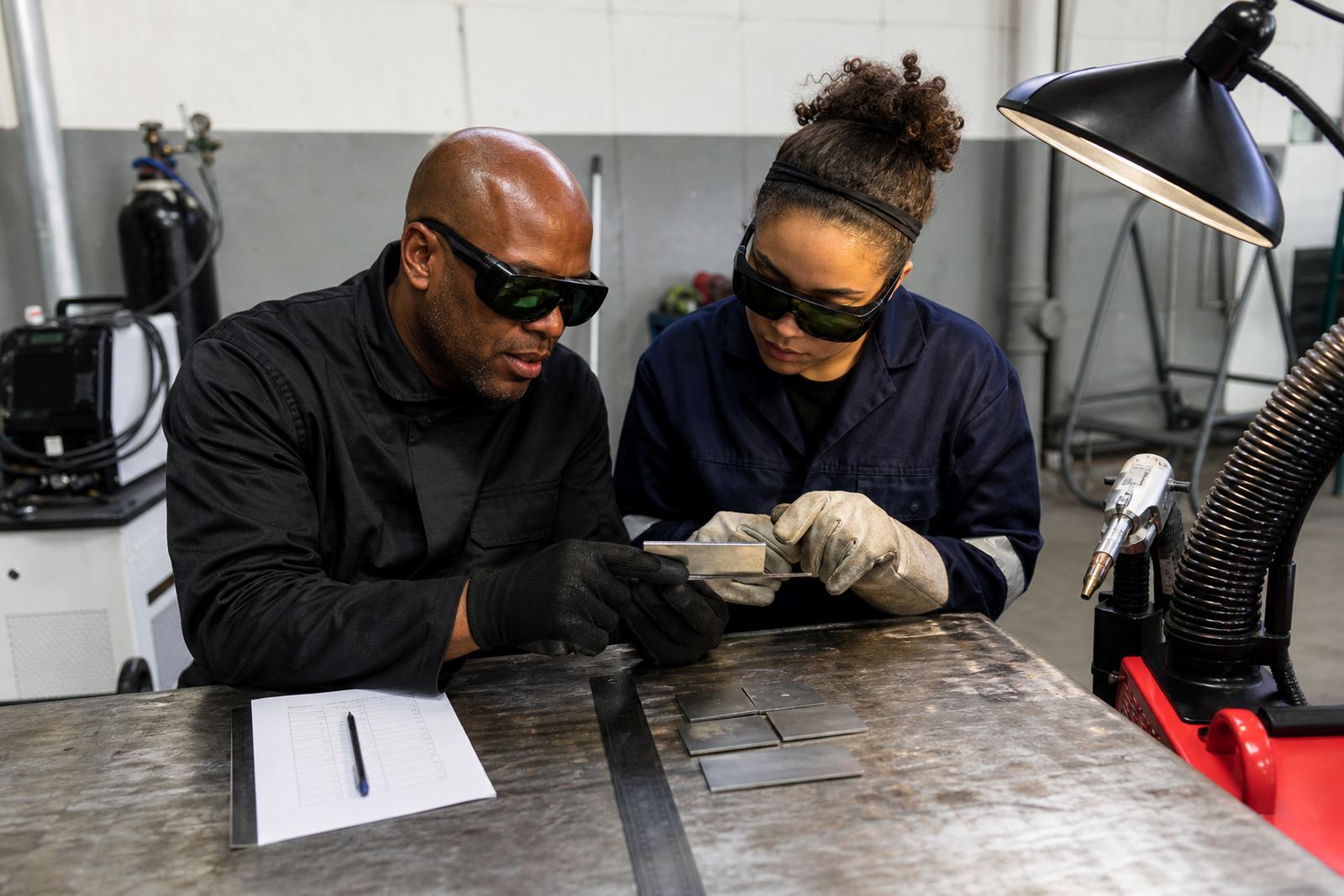
This module focuses on the checks that matter once a bead is down and the part has cooled enough to inspect safely. Learners work through visual assessment, repeatability checks and simple record keeping so they can judge whether a weld is acceptable, needs rework or should be escalated to a supervisor. It is useful on mild steel, stainless steel and aluminium jobs where appearance, fit-up and finishing all affect the final result.
It is not a theory-only add-on. The lessons are built around hands-on viewing of sample welds and guided inspection of common faults such as underfill, excessive crown, burn-through, porosity, poor alignment and heat tint that has gone beyond a normal acceptable range. In busy Gauteng workshops, where production can move fast and power interruptions already disturb the day, having a simple check routine saves time and avoids repeat work.
- Visual inspection habits for fresh welds and finished components
- Consistency checks across repeated passes and repeated parts
- Common weld appearance issues and likely causes
- Basic acceptance notes for workshop use
Who It Suits And Where It Fits In A Workshop
This module suits beginners who are still learning what a good handheld laser weld should look like, as well as operators who already run small batches and want a cleaner standard. It also helps supervisors who need a clear way to check learner work without guessing. Many learners use it after a starter course, then apply the method during practice sessions and refresher visits.
It works well in fabrication shops, repair benches, light production lines, training rooms and maintenance teams that handle brackets, guards, frames, panels and small assemblies. For coastal areas like Durban and Cape Town, it is especially useful to inspect for any surface staining or early signs of contamination before parts are packed or fitted. In Polokwane and inland sites, the focus is often on repeatability and making sure the same settings and hand speed give the same finish across a batch.
- Beginners needing a clear inspection method
- Workshops standardising output across several operators
- Supervisors wanting a simple quality discussion tool
- Teams that need better visual control before dispatch
Module Sizes, Options And Learning Format
The Quality Checks Module is offered as a focused add-on or as part of a larger training programme. It can be used as a short assessment block or extended into a guided practice session with live examples. The content is kept practical, with enough detail to support day-to-day work rather than classroom-only notes.
Available options usually depend on the learner group and the workshop setup. Some teams need a half-day review of inspection standards, while others want a longer practical block with sample parts, fault comparison and supervisor coaching. Where the business already has a small team, the module can be scheduled around shift work so production is not interrupted for long. Boksburg training groups often prefer morning sessions, then an afternoon practice block once the workshop is quieter.
- Single-learner or small group training
- Workshop team session for shared standards
- Trainer-led inspection walk-throughs
- Assessment and documentation support
Installation, Power And Workshop Setup Needs
This module does not need special plant installation, but it does need a clean, well-lit space with stable benches and enough room to lay out test pieces. Good overhead lighting is important because surface marks, edge distortion and small defects are easier to see when the part is not under shadow. If the workshop is affected by load-shedding, a backup light source helps keep the inspection stage consistent and avoids rushed decisions at the end of a shift.
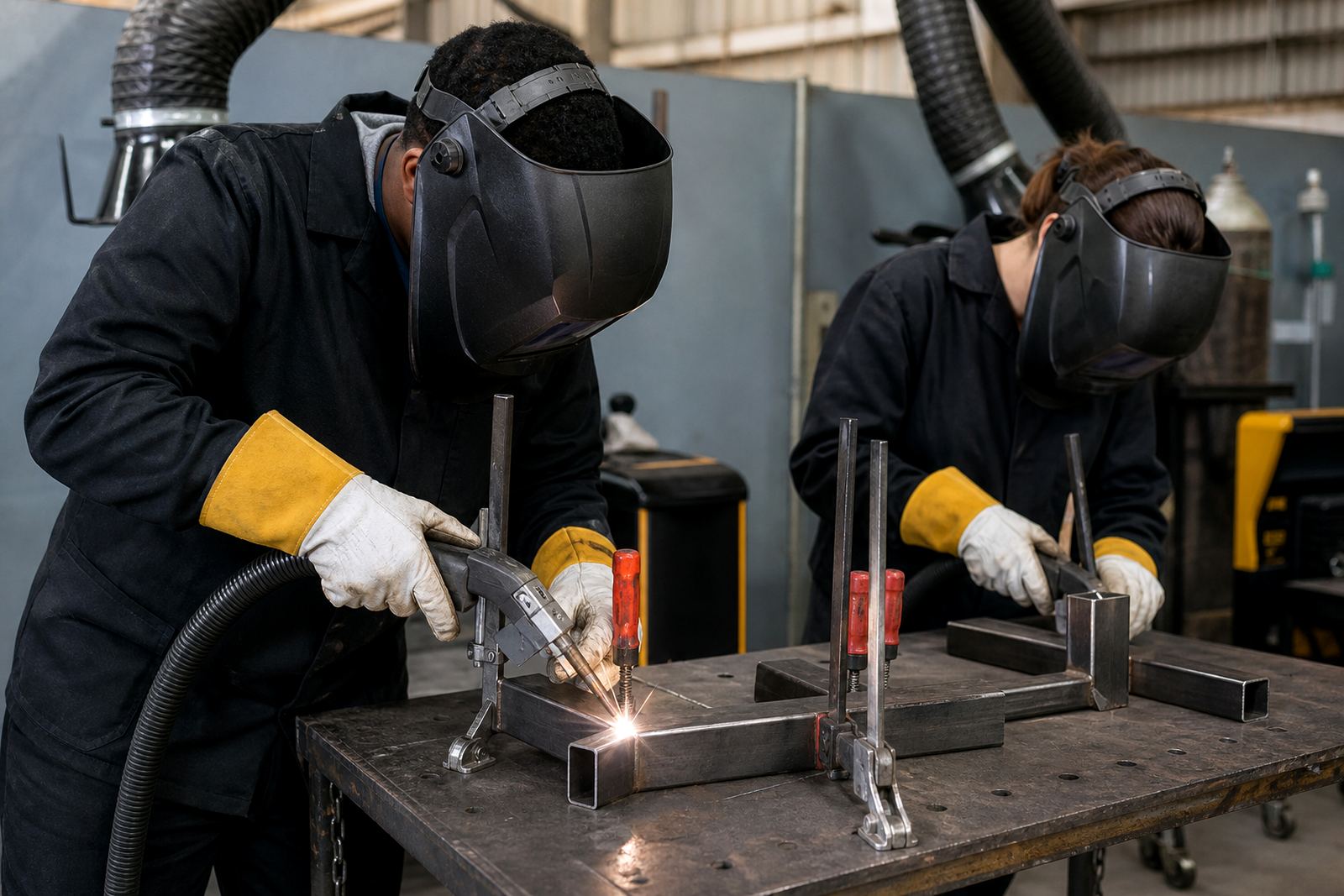
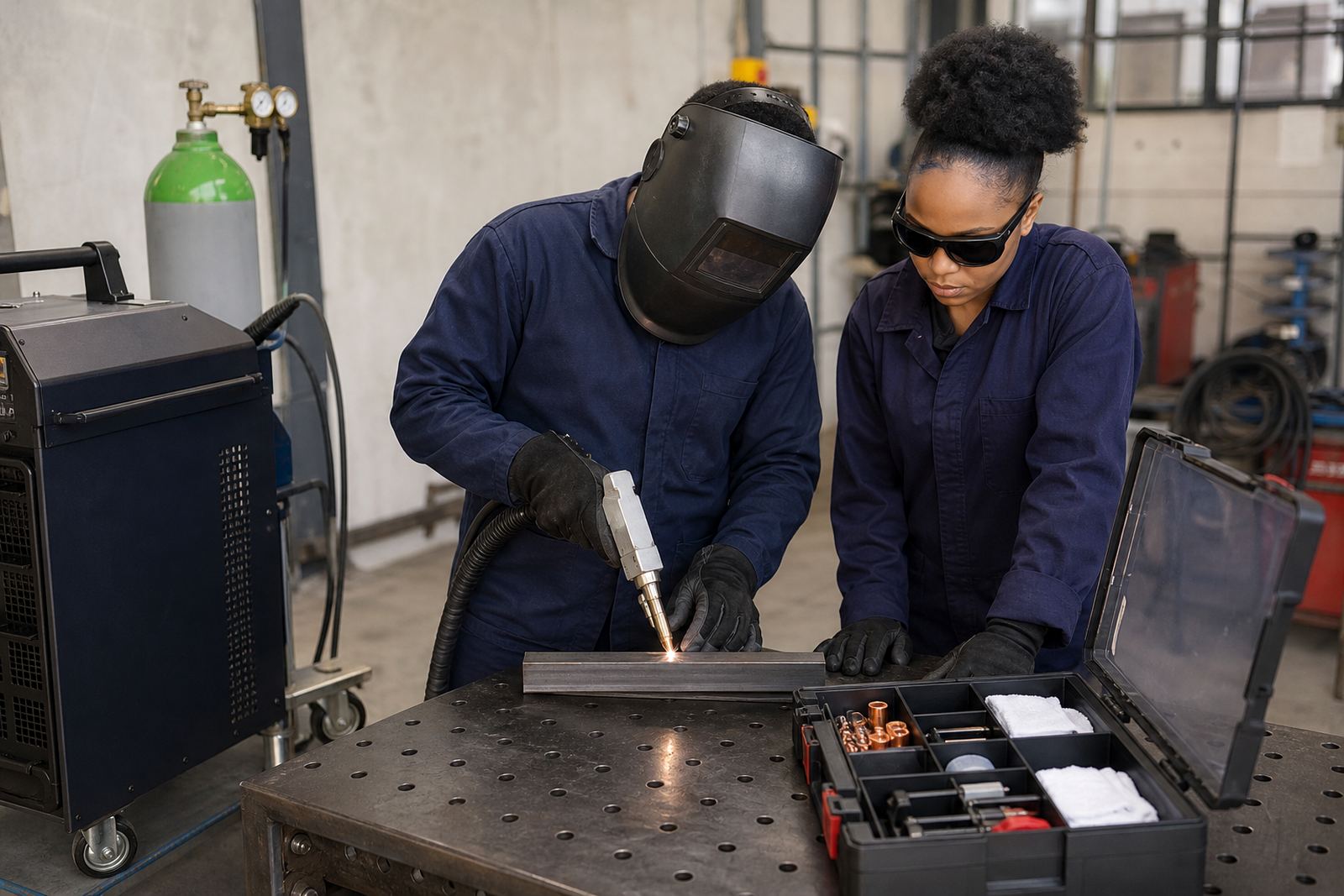
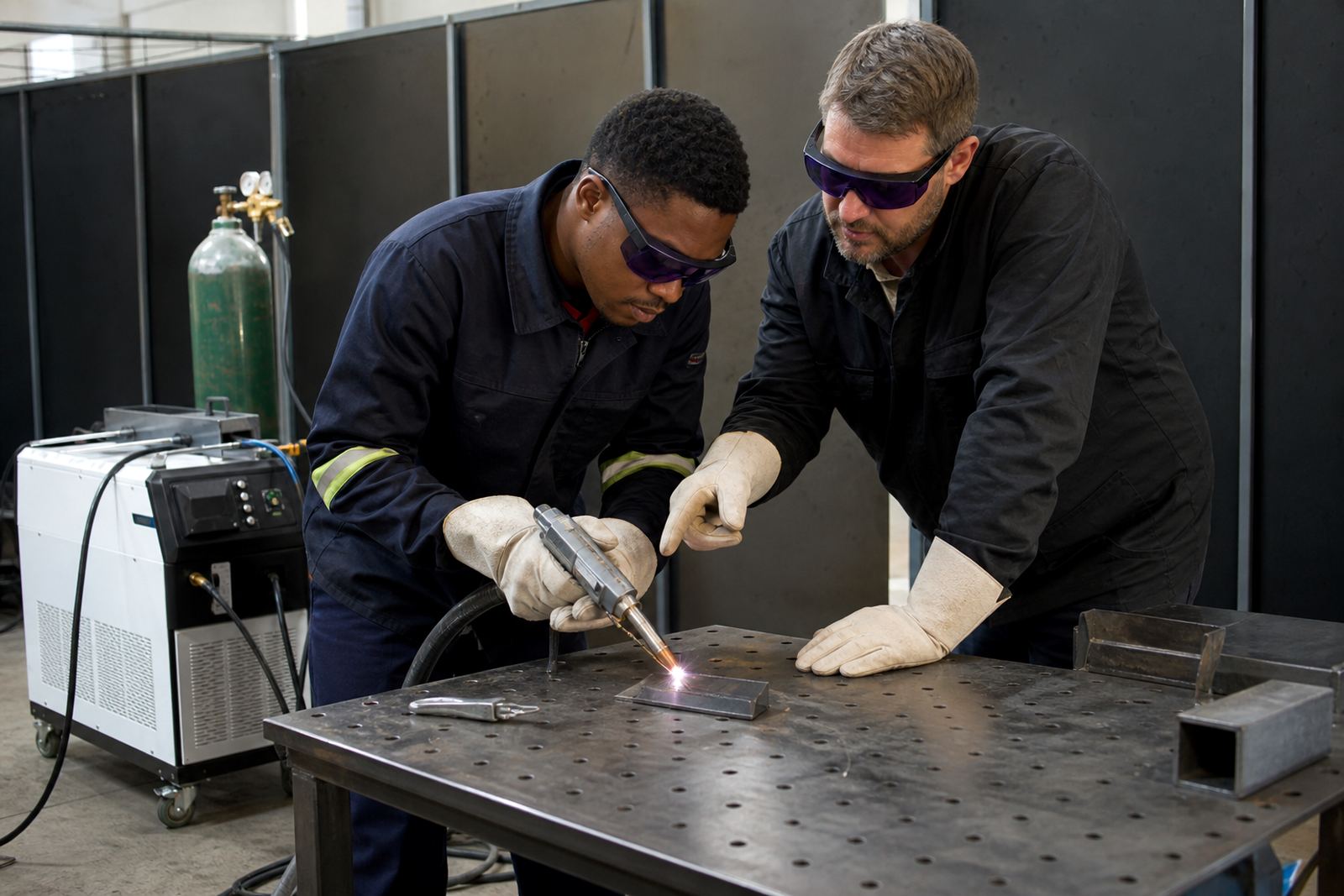
For learners working with handheld laser welding equipment, the inspection area should be kept separate from the active welding area where possible. Good eye protection remains essential around active laser work and any nearby process with reflected light. Fume extraction should also be running during welding so the learner is not judging parts in a dirty air space, especially on coated material or in enclosed rooms. Where gas is used for shielding, the module explains how inconsistent gas coverage can show up later as dull colour, rough edges or a patchy finish.
- Clean bench space and clear part marking
- Strong lighting with low glare
- Eye protection for active welding zones
- Fume extraction for safe workshop air quality
- Stable power for lights, record keeping and demo tools
Common Weld Appearance Issues Learners Learn To Spot
One of the main benefits of this module is learning to recognise the small warning signs before a job moves further down the line. A weld can look neat at first glance and still have issues that affect strength, finish or fit. Learners are shown how to compare samples and ask the right questions about movement, heat input and preparation.
The module covers the kinds of faults that show up often in handheld laser welding work, particularly when a new operator is still getting used to travel speed and torch position. A shallow groove can point to underfill, while a rounded high bead may show too much added material or a slow pass. Discolouration around stainless steel can suggest poor shielding or a dirty surface. On aluminium, learners are taught to watch for uneven wetting and surface contamination. Small mistakes are normal during training, but they must be identified early and discussed clearly.
- Underfill and low crown
- Excessive bead height or overlap
- Burn-through on thin sections
- Porosity and surface pinholes
- Heat tint and visible contamination
- Misalignment and uneven finishing
Care, Servicing And Ongoing Use
The module itself is simple to keep in good shape, but the way it is used matters. Sample parts should be stored dry and labelled so learners can compare old and new examples without confusion. Inspection notes should be kept with the training document pack so operators can track what changed between practice sessions. Where the workshop handles coastal humidity, the sample parts and any inspection tools should be wiped down after use to avoid surface spotting.
For ongoing use, supervisors should review the same check points each time: surface condition, line consistency, edge finish, colour change, fit-up and repeatability across parts. If a team is struggling, a refresher visit can help reset expectations before poor habits become normal. The module also supports consumables planning, because worn tips, dirty lenses or unstable shielding can lead to appearance problems that are easy to blame on the learner when the real issue is maintenance.
- Store sample pieces dry and clearly labelled
- Keep inspection notes with the training pack
- Wipe tools and samples after humid site use
- Review wear items before blaming the operator
- Schedule refresher checks after process changes
What To Check Before You Order
Before placing an order, it helps to confirm what level of inspection support you need and who will use the module. Some sites only need a straightforward learner guide, while others want supervisor coaching, practice plans and a document pack that can be used across several branches. If your team works across Johannesburg, Pretoria, Durban, Cape Town or Polokwane, it is worth checking whether the content should be matched to one workshop standard or adapted for several locations.
We recommend checking the following details before ordering so the module fits the job properly. A quick review now prevents gaps later, especially when multiple operators are sharing one process. For Boksburg-based teams and East Rand workshops, we can also help align the module with site readiness checks and starter kit setup if the learner is still building out their equipment. Communication can be handled through the enquiry form on the contact page, which keeps the order trail neat for the team.
- Number of learners and whether they are beginners or mixed level
- Material types you mostly weld, such as mild steel, stainless steel or aluminium
- Whether you need supervisor coaching or learner-only training
- Need for a document pack, practice plan or refresher follow-up
- Workshop power stability and lighting conditions
Key facts
| Module type | Practical quality inspection module for handheld laser welding |
|---|---|
| Focus | Visual inspection habits, consistency checks and common weld appearance issues |
| Suitable for | Beginners, operators, supervisors and small workshop teams |
| Format | Hands-on guided learning with sample parts and review notes |
| Workshop needs | Clean bench space, strong lighting, PPE, fume extraction and stable power |
| Outcome | Certificate of completion from LaserWelder Training only |