What the advanced course covers
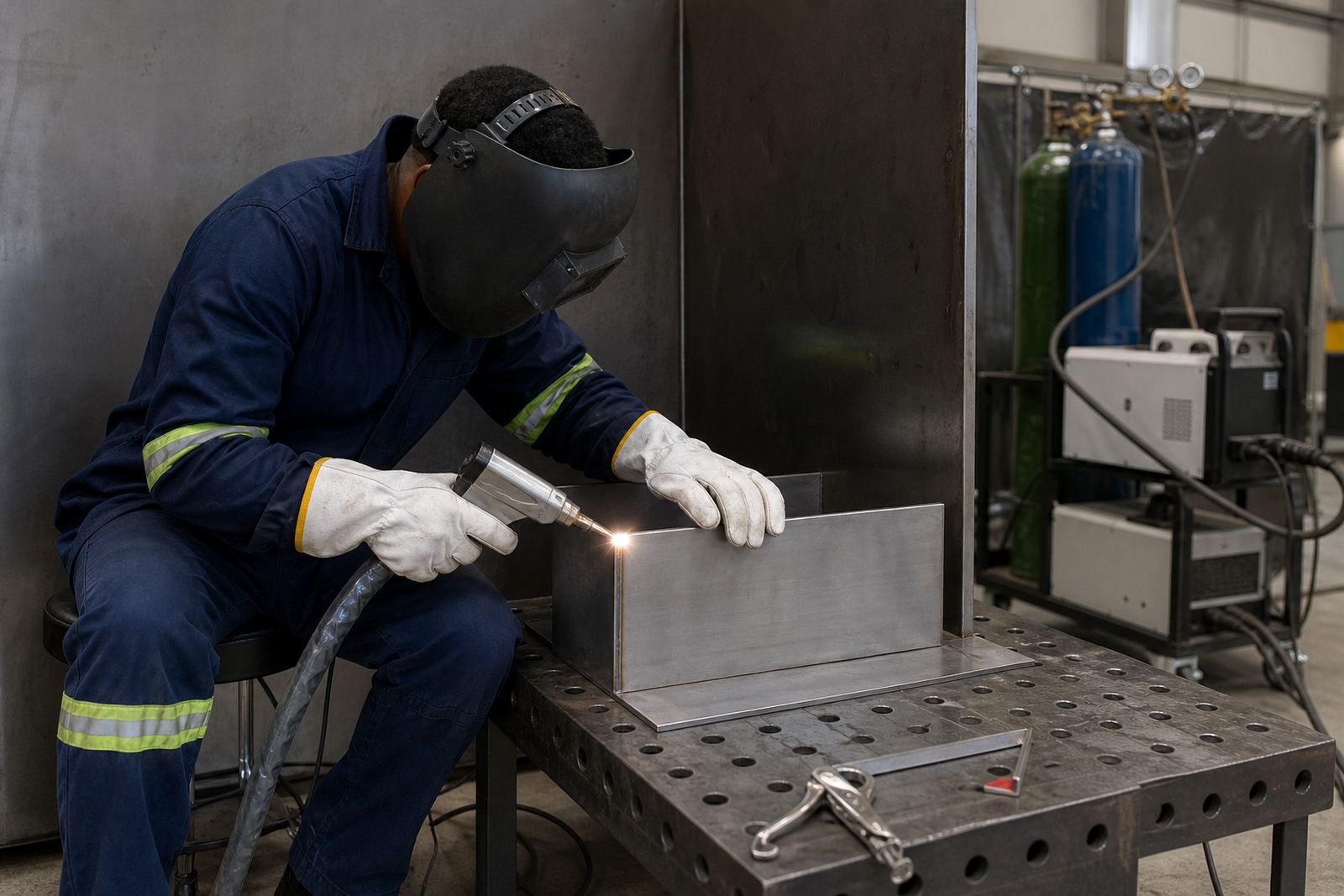
This course is built for people who already know the basics and want to work with more control on stainless steel, mild steel and aluminium jobs where fit-up, heat control and torch handling matter. The training covers handheld laser welding technique, joint preparation, travel speed, angle, focus position and how to keep bead shape more consistant from one weld to the next.
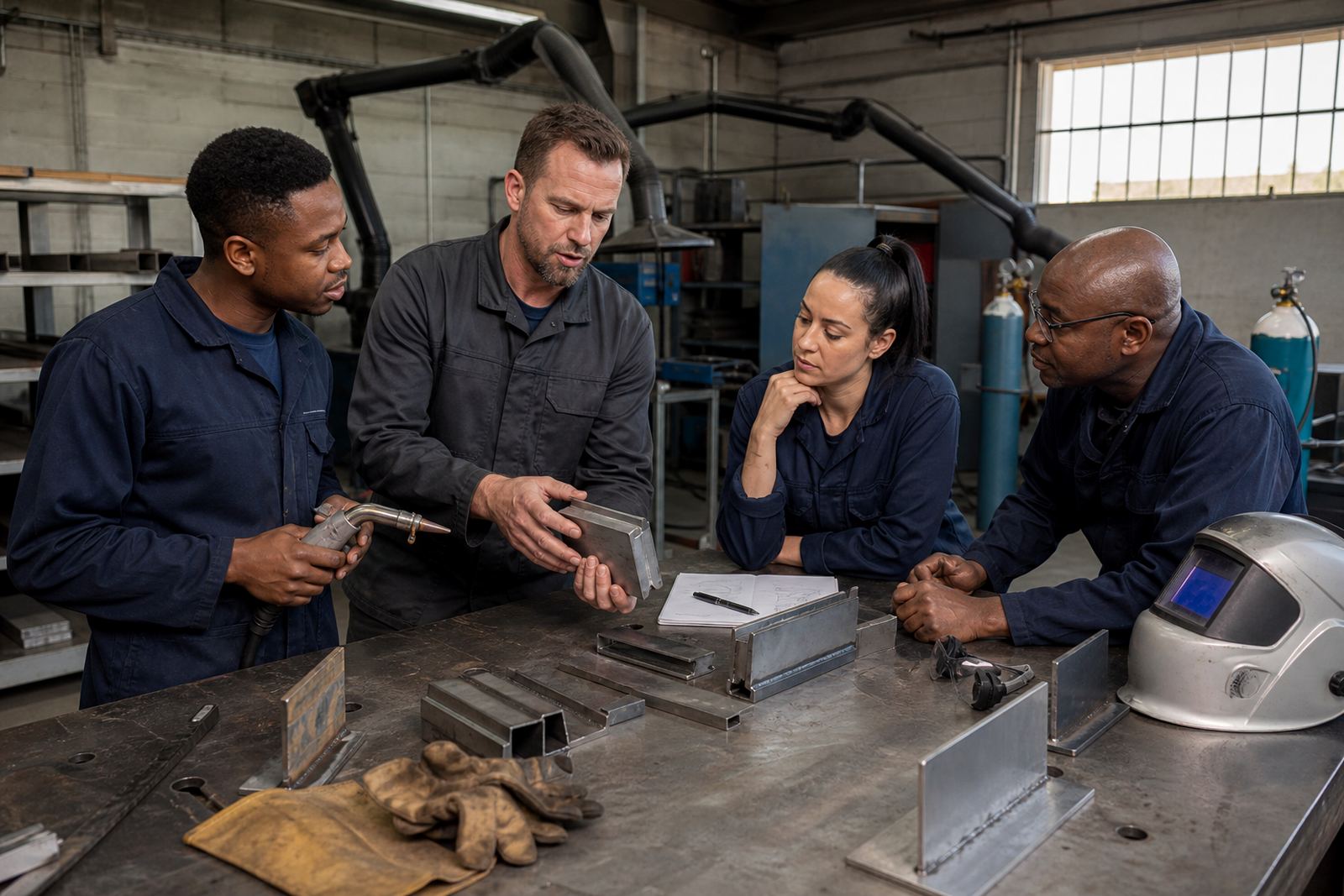
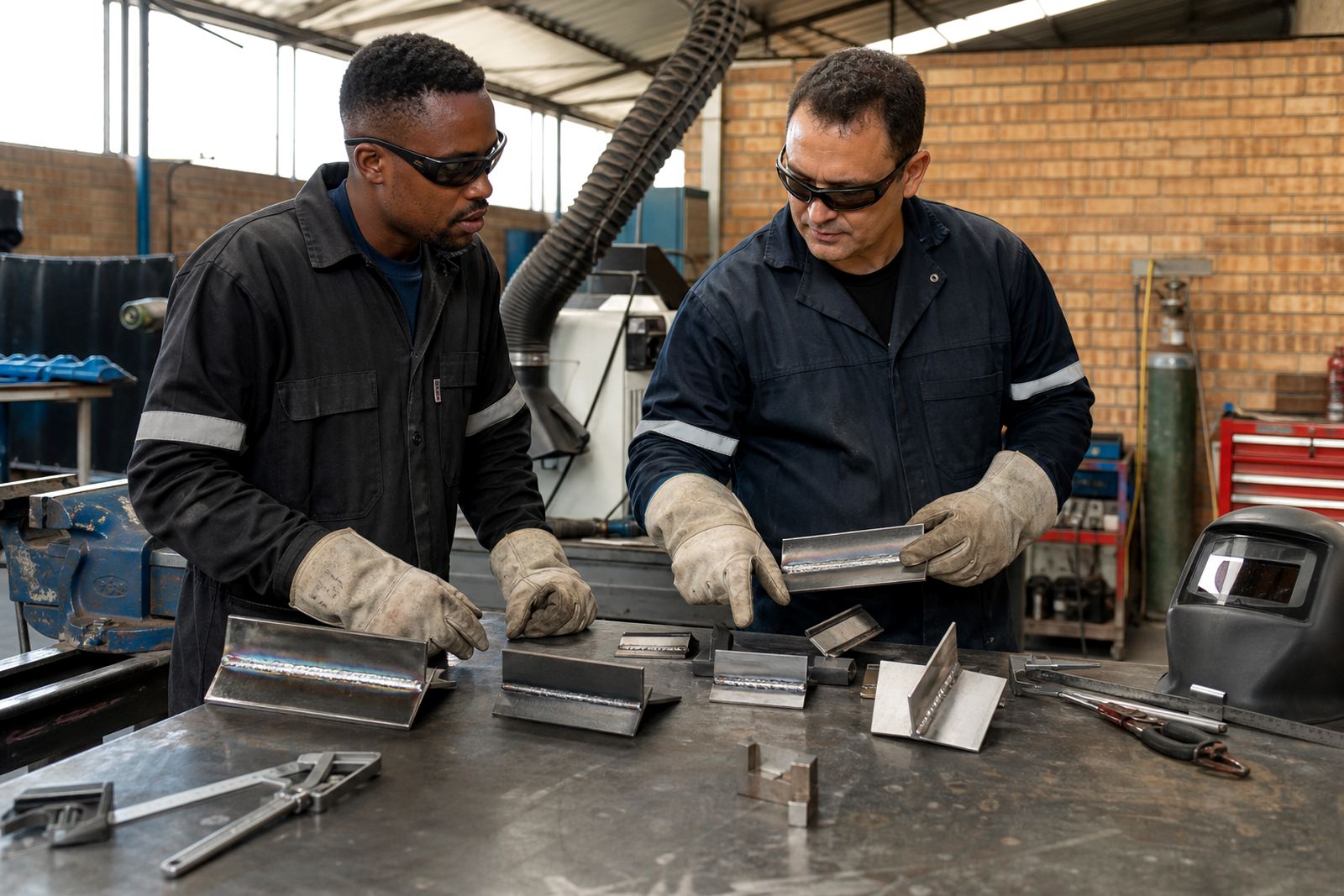
Participants work through real shop situations such as thin sheet, small fabrication repairs, brackets, frames and mixed batch work. The aim is not only to make a sound weld, but to understand why a joint behaves a certain way and how to adjust before the job starts giving trouble.
- Refining hand movement, torch distance and work angle
- Control of heat input on thin and moderate thickness material
- Fit-up checks before welding begins
- Reducing rework, distortion and unnecessary clean-up
- Understanding when a joint needs a different approach
Who this course suits in South Africa
The advanced course suits workshop teams, maintenance staff, metal fabricators and business owners who already use handheld laser welding and need more stable results. It is useful for operations in Boksburg, Johannesburg, Pretoria, Durban, Cape Town and Polokwane, especially where production is split across different shifts or where staff must keep quality steady under time pressure.
It also works well for learners who completed an introductory course and now need more confidence on tougher joints. If a workshop is handling repeat jobs, small batch work or site repairs, the extra control learned here can save time and scrap.
- Experienced laser welding operators
- Workshop supervisors and team leaders
- Maintenance and repair personnel
- Small fabrication shops
- Businesses adding laser welding to an existing workflow
Course format, sizes and training options
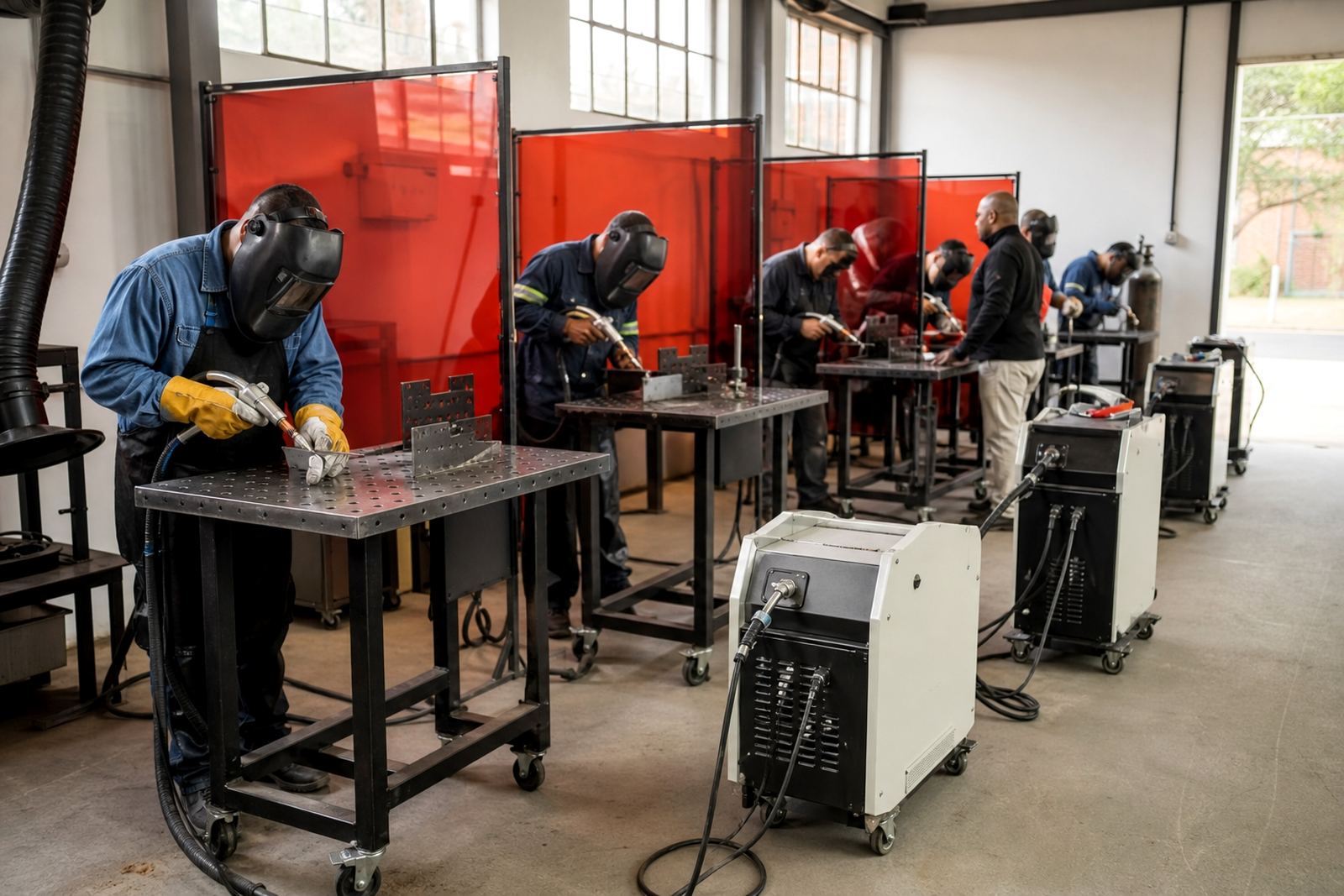
Training is practical and can be arranged for individual learners or small groups, depending on the level of support needed. The course structure can be adjusted for a single user who needs focused coaching, or for a workshop team that must work to the same method and safety rules.
We cover the work area, the machine setup and the operator routine, so learners can repeat the process after training. Where needed, the training document pack and supervisor coaching help the team keep the same standard across shifts and different operators.
- One-on-one practical coaching
- Small group workshop training
- Supervisor coaching for in-house roll-out
- Refresher visits for teams that need a reset
- Training document pack for internal use
Power, gas and site readiness
Handheld laser welding systems need the right site conditions to perform properly. Before training or installation, the power supply must be checked, along with the plug type, cable rating and the available space around the machine. In many workshops, load-shedding planning matters too, so the team must know how the system will be started, protected and shut down when power is unstable.
Gas needs depend on the job and the material, but shielding gas flow must be stable and set correctly. The work area should be dry, well ventilated and free from clutter. For coastal sites, humidity can affect storage and consumables, while dusty inland workshops may need more frequent cleaning of the equipment area and optics checks.
- Check input power and outlet capacity before setup
- Allow clear space around the machine and cable path
- Confirm shielding gas supply, regulator condition and flow rate
- Plan for load-shedding and safe shutdown procedures
- Keep the workspace dry, ventilated and free of trip hazards
Safety, extraction and operator control
Laser welding must be treated as controlled equipment from the first session. The operator must work to the correct laser class for the machine in use, with suitable eye protection and clear rules for bystanders. Fume extraction is needed where welding smoke, vapour or fine particles may build up, especially in enclosed workshops or when working on coated material.
The course covers basic safe work habits, operator induction and practical checks before every session. Learners are shown how to inspect cables, protective gear, gas lines and the work area before starting. The focus is on keeping the operator safe while protecting nearby staff and equipment.
- Use eye protection matched to the laser class and process
- Keep a fume extraction unit or effective ventilation in place
- Restrict access to the welding area during operation
- Check PPE, cables and gas connections before use
- Follow the workshop’s own safety rules and sign-off steps
Starter kits, servicing and what to check when ordering
For learners and workshops that want to get started properly, starter kits are supplied generically and can include the practical items needed for setup, first use and ongoing support. The exact contents depend on the application, but a good kit should support safe operation, clean hand handling and basic maintenance between sessions.
Before ordering, check what material range you will work on, whether the machine will be used daily or only for training, and what support you need for setup and follow-up. If the unit will be moved between sites, think about storage, transport and protection from dust and moisture. Routine care matters too, because clean optics, stable gas flow and proper storage help keep the machine in good working order.
- Check the material type and thickness range you need
- Confirm power supply needs and plug compatibility
- Ask what safety gear and extraction support are required
- Make sure spare consumables are available locally
- Plan for cleaning, storage and scheduled servicing
Every course ends with a certificate of completion from LaserWelder Training only. Clients can use the enquiry form on our contact page to ask about the course, site readiness checks, setup support and the starter kit option that suits their workshop.
Key facts
| Course type | Advanced handheld laser welding training |
|---|---|
| Best for | Experienced operators and workshop teams |
| Training outcome | Certificate of completion from LaserWelder Training |
| Material focus | Mild steel, stainless steel and aluminium |
| Safety focus | Laser class control, eye protection and fume extraction |
| Support options | Site readiness checks, starter kit setup and refresher visits |