What Supervisor Coaching Covers On Site
Supervisor coaching is for foremen, workshop leads and nominated staff who must keep handheld laser welding work steady from one shift to the next. The focus is not only on how the torch is used, but on how people set up the work area, check the job, control safety and repeat the same steps every time. That matters in busy shops where different operators may be learning at different speeds and where load-shedding, dust, heat or coastal humidity can affect preparation and storage.
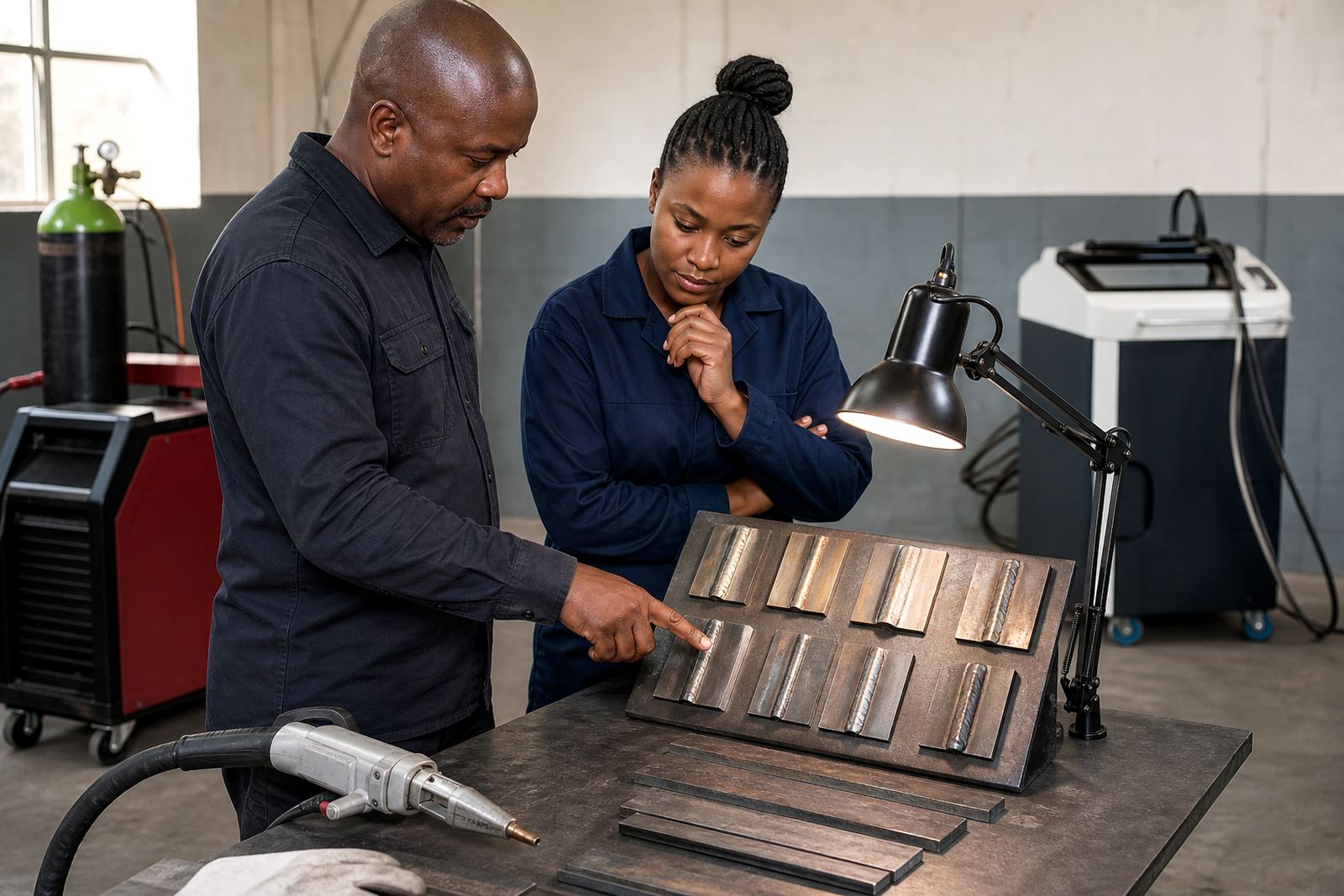
We work through the real tasks a supervisor has to manage, including learner flow, equipment care, job sequencing and daily checks. The coaching also covers how to spot poor habits early, such as wrong standoff, uneven travel speed, poor joint cleaning or rushed set-up. In many cases, this support is what keeps training useful after the first session, because the supervisor is the one who reinforces the method during normal production.
- Supervision of learner setup and workstation order
- Daily checks for laser class controls, eye protection and fume extraction
- Guidance on repeatable weld preparation and hand position
- Coaching for job planning, material handling and shift handover
- Practical support for keeping a training group on the same standard
Safety Standards We Reinforce During Coaching
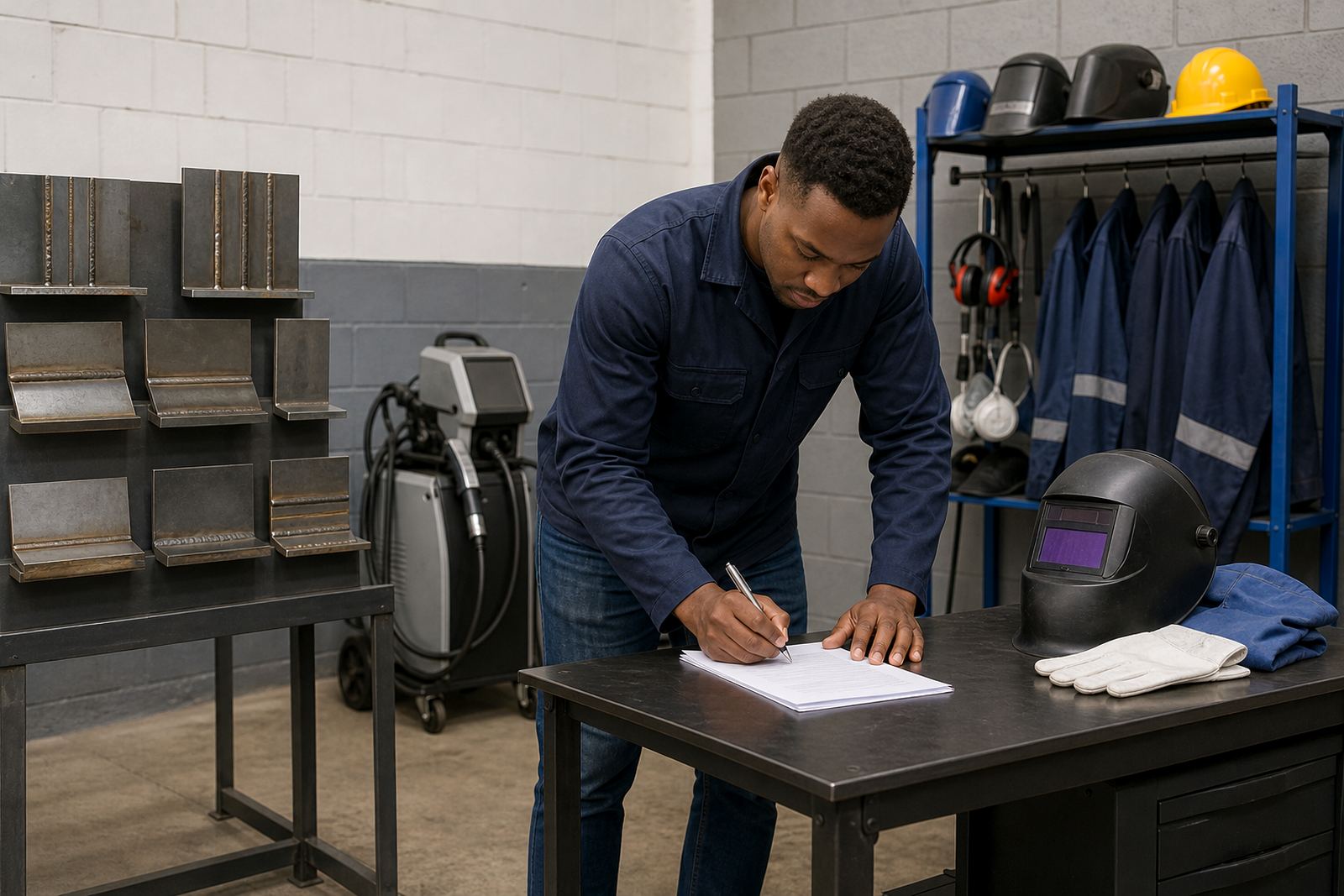
Handheld laser welding must be managed with clear safety habits, and supervisors need to know exactly what to look for. We coach on controlled access to the work area, correct sign-off before use and the right protective equipment for the process. The laser source and the welding setup must be treated with care, and the supervisor must understand the difference between general shop PPE and the specific controls needed for laser work.
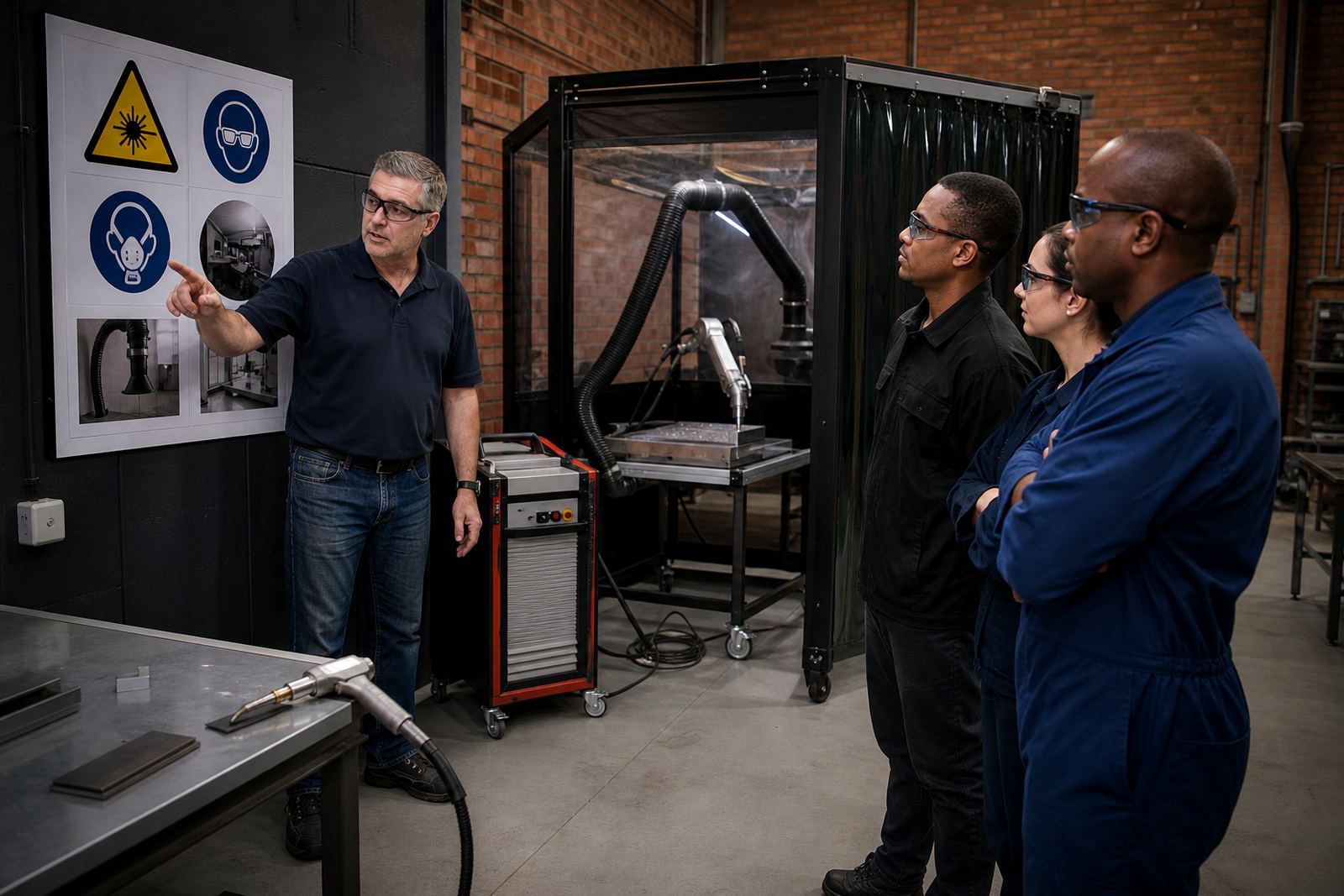
We cover the practical parts that are easy to overlook in a fast-moving workshop. Eye protection must suit the laser class and the job setup. Fume extraction should be positioned properly and switched on before work starts, especially when welding coated materials or working in closed spaces. On some sites, we also discuss screen placement, reflective surfaces and how to keep bystanders out of the line of risk. That keeps the process safer for learners and for staff nearby, even when the workshop is under pressure to meet deadlines.
- Laser class awareness and controlled access rules
- Eye protection checks for the correct application
- Fume extraction position, airflow and filter upkeep
- Safe handling of test pieces, clamps and hot parts
- Basic fault response steps before calling for technical help
How The Coaching Process Works
We start with a short discussion about the site, the team and the type of work being done. That includes the number of learners, the workshop layout, the materials being welded and whether the team is using starter kits, shared equipment or mixed workstations. If a site is in Johannesburg, Pretoria, Durban, Cape Town or Polokwane, the approach is the same, although the advice may differ based on floor space, ventilation and power stability.
The next step is a practical walkthrough. We look at the current workflow, the order of tasks, the condition of the equipment and the habits already in place. From there, the coaching is shaped around the supervisor’s needs. Some teams need help with learner control and reporting, while others need better consistency on weld appearance, travel speed or post-weld handling. After the session, the supervisor gets a clear action list so the changes can be applied immediately.
- Site discussion and training goal setting
- Workstation and workflow walkthrough
- Hands-on coaching with the supervisor present
- Action list for daily and weekly follow-through
- Optional return visit to check progress
Starter Kit Set-Up And Workshop Readiness
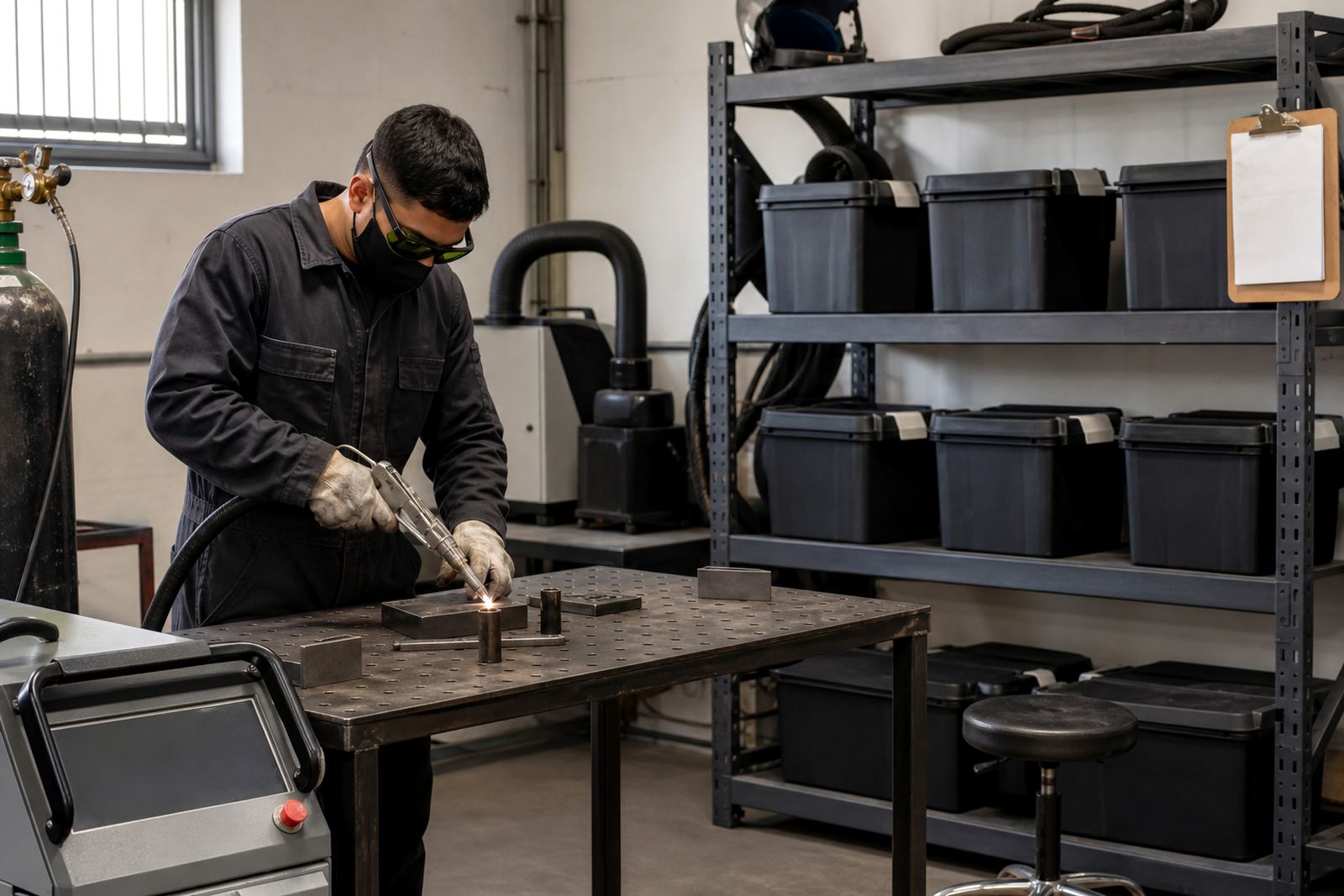
Where starter kits are being used, supervisor coaching includes setup guidance so the kit is used properly from the beginning. That may involve torch handling practice, cable routing, storage for consumables and how to keep the kit clean in a workshop environment. In Gauteng workshops, dust and heat can affect fittings and lenses, while coastal sites may need more attention to storage and corrosion control. Good habits at this stage save time later and reduce avoidable wear.
We also cover workshop readiness, which includes a clear surface for learner practice, enough room around the working point and a defined place for PPE and tools. The supervisor is shown how to keep the kit in a usable state between sessions and how to brief learners before they begin. This is especially helpful when a team shares equipment across shifts or when a new operator is taking over from someone more experienced.
- Starter kit unpacking and setup sequence
- Consumable checks and storage advice
- Workstation layout for learner rotation
- Simple cleaning and inspection routine
- Handover notes for the next shift or supervisor
Turnaround, Follow-Up And Maintenance Intervals
Turnaround depends on the size of the team and whether the coaching is for one workshop or several learners across a group. For a single site, the first visit can usually be arranged after the booking is confirmed and the site details are received. Follow-up visits are scheduled around the team’s production load so the supervisor can test the new habits under real working conditions, not just during a once-off session.
Maintenance intervals are built around practical workshop use. We normally recommend a brief daily check before work starts, a weekly review of safety and extraction performance, and a more detailed refresher when there is a change in material type, operator or equipment condition. If the site runs long shifts or works in a dusty area, checks may need to happen more often. The aim is to keep the standard steady and catch small problems before they turn into rework or stoppages.
- Daily: eye protection, extraction and workstation check
- Weekly: torch handling, consumables and cleaning review
- Monthly or as needed: supervisor refresher and workflow check
- After changes: review for new operators, materials or shift patterns
Pricing Approach And What You Receive
Pricing is based on the site size, the number of supervisors or learners involved, the distance travelled and the depth of support required. A small coaching visit for one team is priced differently from a broader workshop support programme that includes repeated check-ins, training documents and technical follow-up. We keep the approach straightforward so the customer knows what is included before the visit is confirmed.
Each booking is matched to the actual need rather than a fixed one-size-fits-all package. That means you can request a once-off coaching visit, a short series of follow-up sessions, or a support plan that includes refresher visits and workflow advice. The usual outcome is a supervisor who knows how to guide learners, keep the setup neat and maintain the same standard across shifts, with clear notes left behind for the team.
- Quote based on site size and support level
- Single visit or follow-up programme available
- Training document pack can be included
- Technical help available after the visit
- Support can be arranged through the contact form
Key facts
| Service type | Supervisor coaching for handheld laser welding teams |
|---|---|
| Typical format | On-site coaching, walkthroughs and follow-up checks |
| Safety focus | Laser class awareness, eye protection and fume extraction |
| Suitable for | Supervisors, foremen, workshop leads and learner groups |
| Coverage area | Boksburg, Gauteng and major South African centres |
| Certificate | Certificate of completion from LaserWelder Training only |