What Our Safety Briefings Cover
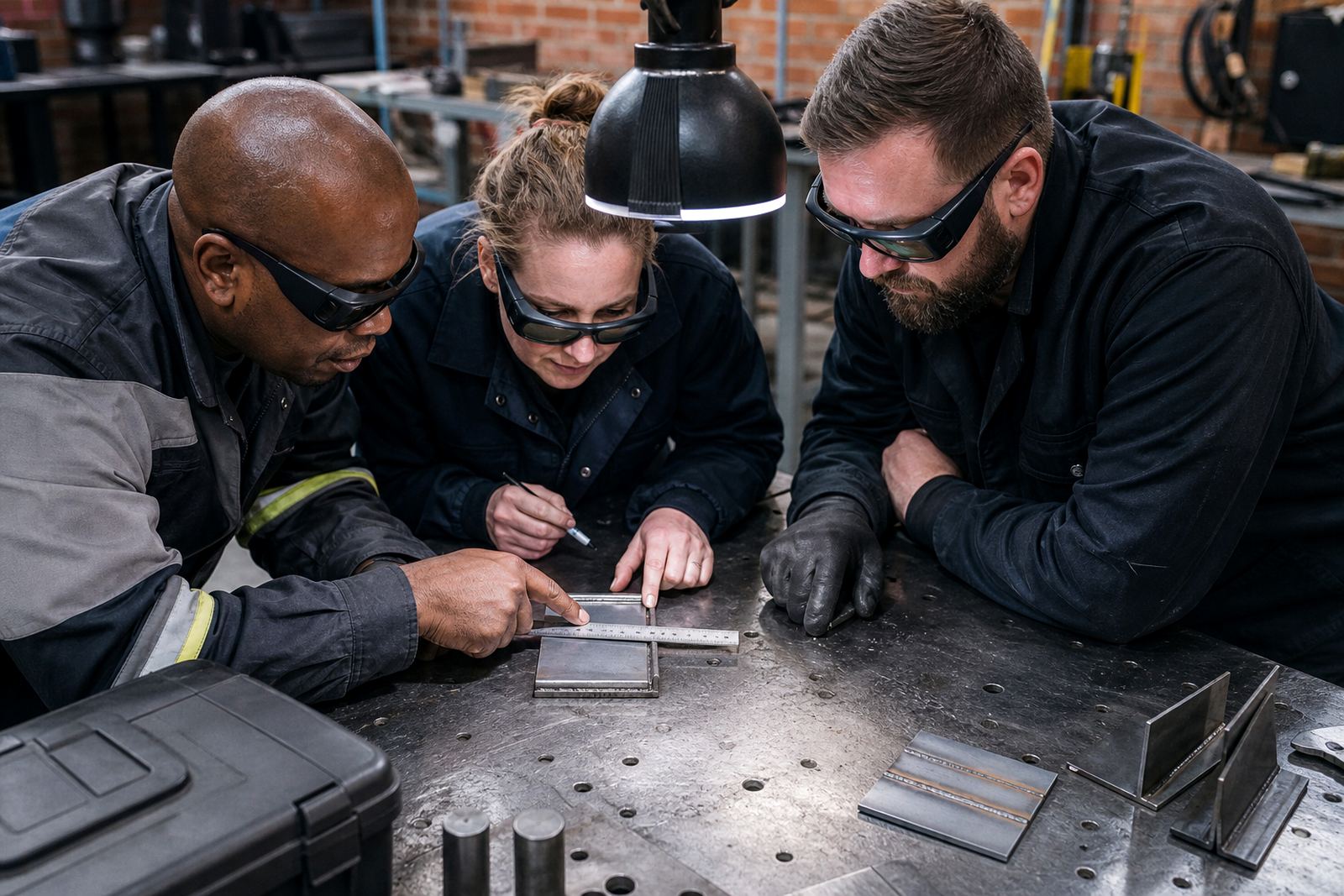
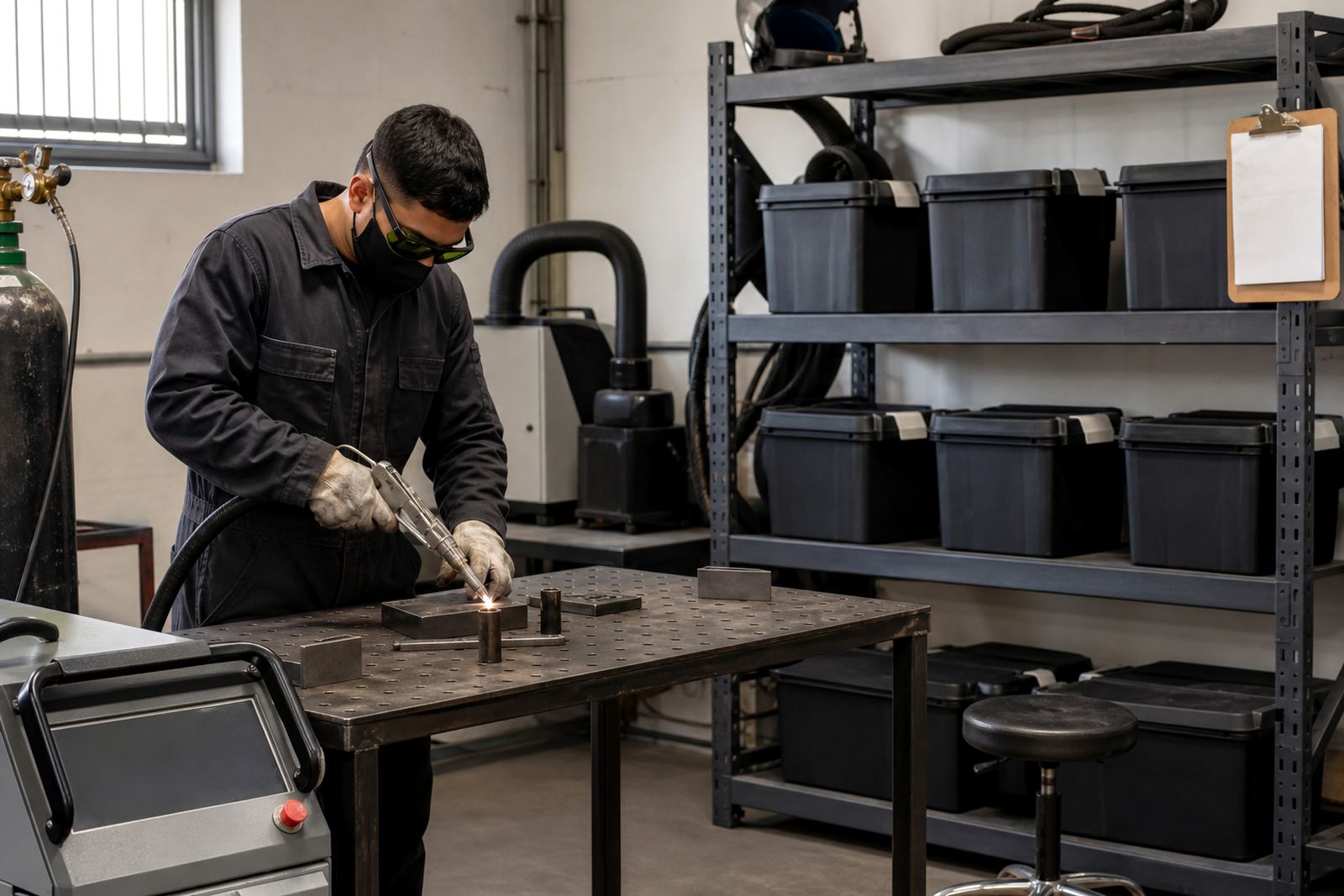
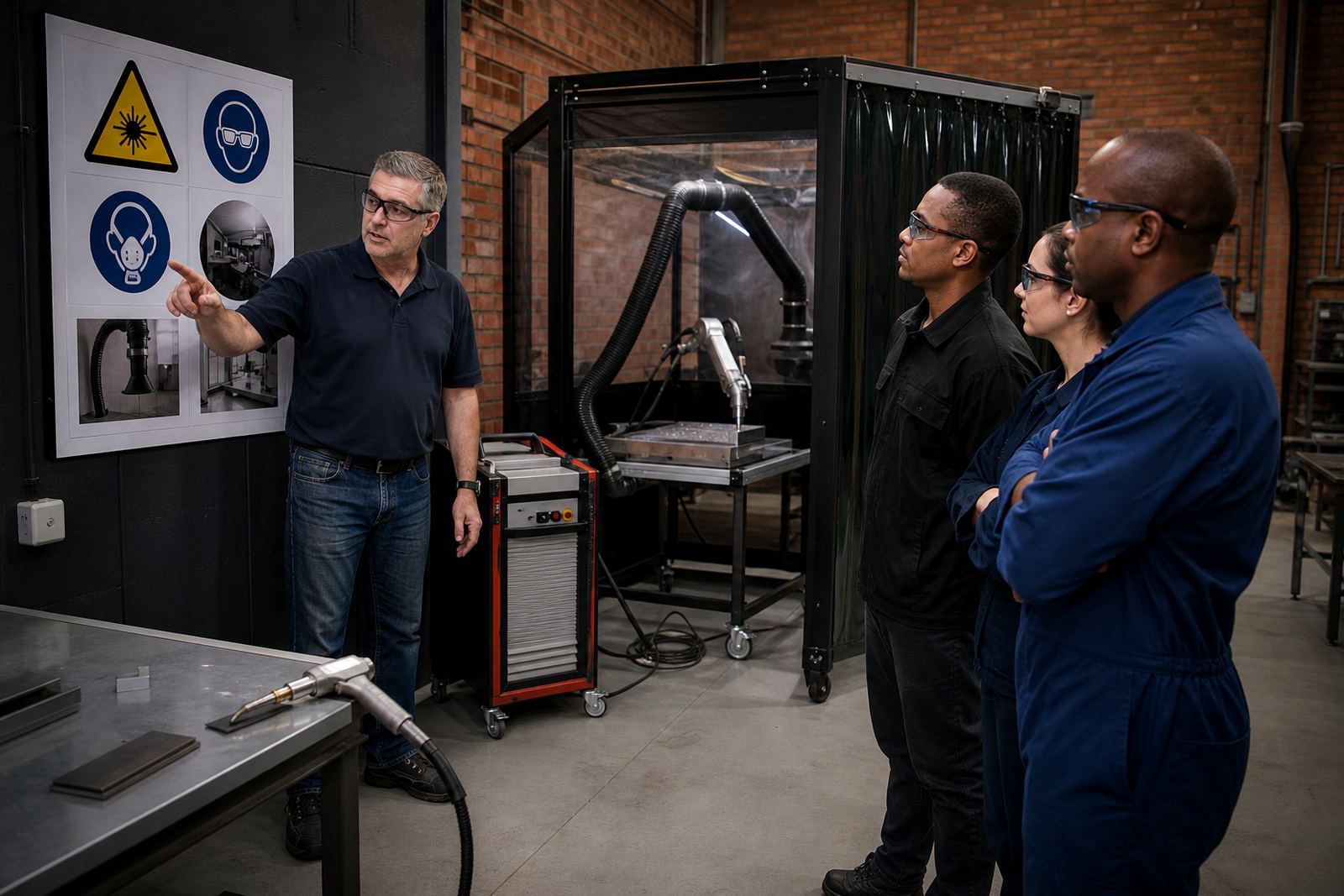
Each briefing is practical and direct, with the focus on day to day workshop habits rather than theory alone. We explain the hazards linked to handheld laser welding, where the beam can reflect, what PPE is needed and how to keep people out of the wrong area while work is in progress. The session also covers housekeeping, cable handling, bench layout and how to manage distractions in a busy shop.
- Laser class awareness and safe operating limits
- Eye protection selection for the beam wavelength in use
- Controlled zones, warning signs and access control
- Fume extraction set up and airflow checks
- Basic fire watch habits and emergency response steps
How We Set Up The Room Before Training Starts
Before the briefing begins, we review the space and check whether it is suitable for the machine, the task and the number of people in the room. For small workshops in Boksburg and the East Rand, that often means checking clear walkways, surface condition, socket load, trip points and whether the extractor can move enough air for the metal being welded. If the work is near stainless steel, galvanised steel or coated parts, we pay extra attention to fumes and the need for local extraction close to the source.
We also look at light control, nearby reflective surfaces and how to separate operators from visitors, supervisors and fitters. If the site runs during load-shedding or on a backup supply, we check what happens to extractor performance, lighting and machine shut down. It is easier to fix these issues before the first weld than after an incident.
Briefing Content For Operators And Supervisors
The session is useful for new operators, workshop supervisors and business owners who need a clear standard for safe work. We keep it specific to handheld laser welding and the materials your team handles. The idea is to leave everyone with the same rules, the same terminology and a simple process they can repeat on every shift.
- How to identify the laser class and what that means in practice
- Which eye protection must be worn, when and by whom
- How to establish a controlled zone around the welding area
- How to position extraction so fumes are captured properly
- How to pause work if guards, filters or PPE are not right
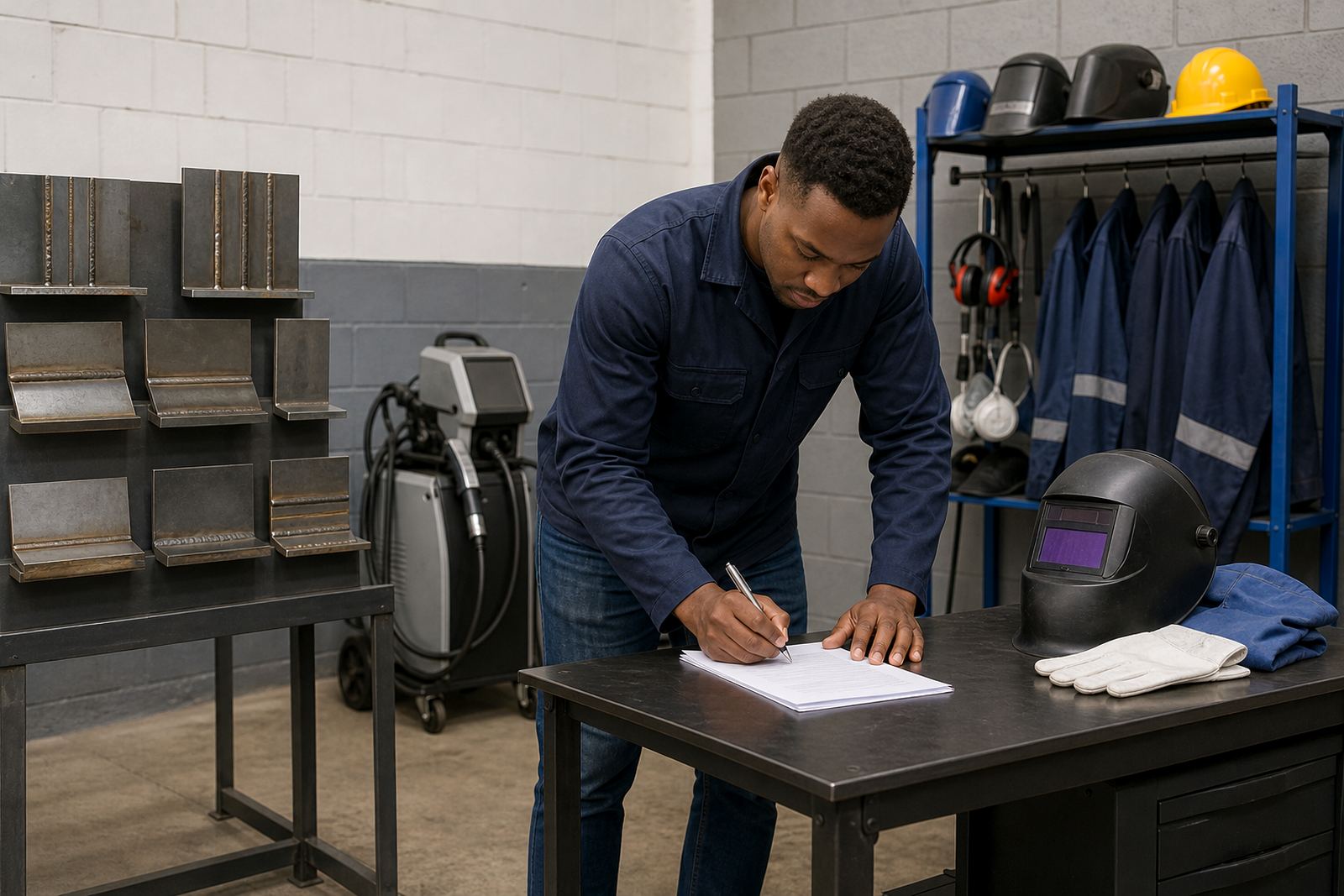
- What to record after the briefing for internal compliance files
Our Process From Enquiry To Briefing
Clients contact us through the enquiry form on our contact page and tell us what machine, materials and workshop layout they have. From there we schedule a briefing at our Boksburg base or on site, depending on what suits the team. We then confirm the people attending, the floor space available and whether the session should include operators only or the full workshop crew.
Typical turnaround is quick for Gauteng work, and on most bookings we can plan within a few working days depending on the diary and travel distance. For Johannesburg, Pretoria, Durban, Cape Town and Polokwane, we arrange the dates around the route and the number of learners or staff involved. If a site has urgent changes after a machine install or a layout shift, we can often fit in a refresher visit sooner than a full repeat briefing.
Maintenance Intervals And Refresher Timing
Safety is not a once off item. We recommend refresher briefings whenever a workshop changes its machine, changes the material mix or brings in new staff. If the extractor is serviced, filters are replaced, or the welding area is moved, the brief should be repeated so the team knows what has changed. For busy workshops, a short refresher every 6 to 12 months is usually sensible, with additional visits after an incident, audit finding or equipment upgrade.
We also advise regular checks on eye protection condition, signs of cracking, strap wear and lens contamination. Fume extraction units need their own maintenance schedule, including filter checks, airflow checks and cleaning around the inlet. If the team uses starter kits, the briefing can include safe storage for nozzles, consumables and spares so nothing gets mixed up or damaged.
Pricing Approach And What A Quote Includes
We quote according to the briefing format, travel, number of attendees and whether the work is done in the workshop or at our training base. The pricing approach is straightforward, with the scope set out before we start so there are no surprises later. If you need one briefing for a small team, or a repeat session for more than one shift, we price it to match the time and the level of detail required.
Each quote can include preparation time, the actual briefing, a short site walkabout, a written summary and basic recommendations for safer workflow. If you need follow up work such as operator inductions, workflow advice, starter kit setup or a training document pack, we can add that in the same visit. That keeps the process neat for workshops that want one contact point for training and support.
What You Get At The End
At the end of the briefing, attendees receive a clear understanding of what safe handheld laser welding looks like in a real workshop. Where training has been completed as part of a booked session, participants receive a certificate of completion from LaserWelder Training only. We do not overcomplicate the paperwork, but we do make sure the main points are recorded and easy to refer back to when needed.
- Practical safety notes for operators and supervisors
- Controlled zone rules for the welding area
- Eye protection and PPE reminders
- Extraction and ventilation checks to keep on file
- Next step guidance for refresher visits or extra training
Key facts
| Service type | Laser welding safety briefings for handheld systems |
|---|---|
| Focus areas | Laser class awareness, eye protection, controlled zones, fume extraction |
| Delivery areas | Boksburg, Johannesburg, Pretoria, Durban, Cape Town, Polokwane |
| Format | On site or at our Boksburg training base |
| Turnaround | Usually within a few working days, subject to booking and travel |
| Maintenance interval | Refresher every 6 to 12 months, or after equipment and process changes |