What Consumables Planning Covers
Consumables planning is the basic support needed to keep handheld laser welding work moving in a clean, organised way. It focuses on the items that get used up, wear out or need regular replacement, together with the simple storage and reorder habits that help you avoid downtime. For workshops in Boksburg, Johannesburg, Pretoria, Durban, Cape Town and Polokwane, this is especially useful when orders arrive in batches and job timing can shift fast.
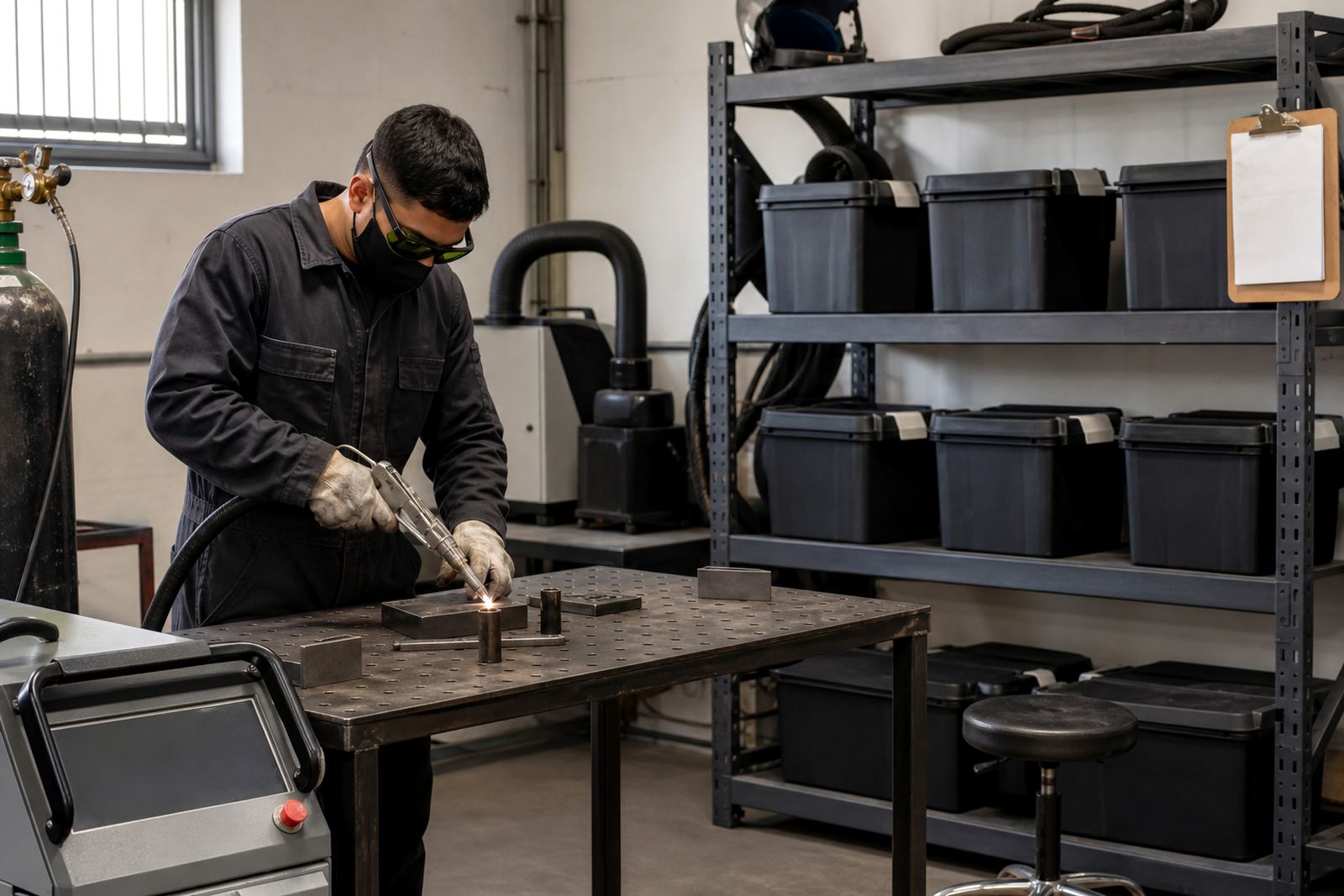
We look at the support items that affect day to day use of a handheld laser welding setup, including wire feed support where used, protective windows, nozzles, lenses where applicable, cleaning cloths, marking items, gloves, torch sleeves, safety glasses and fume extraction filters. The aim is not to overcomplicate the stock room, but to keep the right consumables available in the right quantity. That matters when load-shedding changes your working hours or when a coastal workshop has higher humidity and faster wear on stored items.
- Stock list based on your current machine use and job volume
- Replacement timing for common wear items
- Storage guidance for dry, clean and sealed keeping
- Simple reorder levels for learners, small workshops and team use
Items We Commonly Plan For
The exact list depends on the machine, the workpiece material and how often the unit is used, but most planning starts with a fixed set of support items. We separate daily-use items from monthly and quarterly replacements so that the store cupboard is not full of slow-moving stock. For a learner kit, the list is kept lean. For a workshop with multiple operators, the list must cover shift changes, practice runs and repeat jobs.
- Laser safety glasses with the correct optical density for the machine output and wavelength range
- Protective windows, lenses and lens covers where the machine setup uses them
- Contact tips, nozzles, feed parts and guide sleeves where fitted
- Fume extraction filters, pre-filters and carbon media if the extractor uses them
- Cleaning wipes, lens cloths, cotton swabs and non-abrasive cleaning fluid
- Gloves, ear protection where needed, marker pens and surface prep items
- Labels, bins and sealable storage containers for dry parts control
We also check whether your support stock is stored away from dust, direct sun and workshop moisture. In Durban and other coastal areas, a sealed cabinet is often a better choice than open shelving because humidity can affect packaging, adhesive items and some electrical accessories. Small changes like this reduce waste and help keep replacements predictable.
How The Planning Process Works
We keep the process practical. First, we assess what equipment you are using, how many operators will work with it, and whether the machine is for training, light workshop use or regular production. Then we match the likely consumption pattern to a stock list and set a basic replacement plan. If you are starting from scratch, we can work from the starter kit and build a fuller consumables schedule around it.
- Step 1: Review your welding workflow, job types and storage space
- Step 2: Identify the consumables that wear out fastest on your setup
- Step 3: Set minimum stock levels and a simple reorder point
- Step 4: Agree on inspection intervals for storage, filters and safety items
- Step 5: Issue a written consumables plan with practical notes for the team
This support is useful for supervisors as well as new operators because it makes responsibility clear. If a team knows who checks the stock, who signs off the replacements and what needs to be ordered before a busy week, the workshop runs with fewer gaps. We can also add notes for induction files and training document packs so the same information is easy to find later.
Maintenance Intervals And Replacement Timing
Consumables do not all follow the same cycle, so we set intervals according to use. Some items are checked daily, some weekly and some after a set number of hours or jobs. A busy training room may need faster turnaround than a small repair shop. If your site is affected by intermittent power cuts, it helps to check filters and storage seals more often because unfinished work and repeated start-stop use can increase dust and residue.
Typical planning intervals include:
- Daily checks for safety glasses, gloves, nozzles and visible contamination
- Weekly checks for extractor filters, lens condition and storage cleanliness
- Monthly review of fast-moving items and reorder levels
- Quarterly review of slower moving stock and any items nearing shelf-life limits
We also note when an item should be replaced sooner, for example after contamination, damage, bent fitment or visible wear. On some setups, a small part can still work but begin to affect beam quality, operator comfort or finishing consistency. Catching that early prevents repeated rework and avoids unnecessary strain on the machine.
Pricing Approach For Planning Support
Our pricing approach is based on the level of detail needed and the size of the operation. A single learner or small workshop usually needs a short stock plan and a simple replacement schedule. A business with several operators, multiple machines or mixed job types needs a more detailed review. We keep pricing tied to the time needed for assessment, planning and follow-up rather than selling a fixed bundle that may not fit your site.
When requested, we can also include a basic comparison of support items so you can decide what to keep in regular stock and what to buy only when needed. That helps avoid cash tied up in slow movers. For workshops in Gauteng and other provinces, this is useful when deliveries take different times depending on distance and access to the site. Final pricing is confirmed after the enquiry form review, based on what needs to be covered.
Who Benefits Most From Consumables Planning
This service suits learners, supervisors and workshop owners who want a neater system for support items and replacement timing. It is particularly helpful where several people use the same machine, because shared equipment often loses consumables faster than expected. It also helps new operators understand that good welding starts with the right preparation, not just the handpiece and the material.
- Training rooms that need repeatable stock control for each intake
- Small fabrication shops that want fewer interruptions during jobs
- Workshops near the coast that need better storage protection
- Sites with power interruptions that need cleaner restart routines
- Businesses setting up starter kits for new operators
If needed, we can link consumables planning with starter kit setup, workflow advice, supervisor coaching and refresher visits. That way the stock list, the operator habits and the safety routine all point in the same direction. Our support is based in Boksburg and available to clients across South Africa through the enquiry form on our contact page.
Key facts
| Service type | Consumables planning for handheld laser welding support items |
|---|---|
| Base | Boksburg, Gauteng |
| Coverage | Johannesburg, Pretoria, Durban, Cape Town, Polokwane and nationwide |
| Planning format | Stock list, minimum levels, reorder points and replacement intervals |
| Typical review points | Daily, weekly, monthly and quarterly checks |
| Included notes | Storage, humidity control, fume filters, safety gear and operator use |
| Pricing | Quoted after enquiry based on site size, machine count and detail required |