Fumes Are Part of the Job, Even on Clean Welds
Handheld laser welding can produce far less spatter than some older processes, yet it still creates a plume of fine metal particles and gases at the weld point. That plume may look light, but it can hang in the breathing zone, settle on benches and build up around fixtures if there is no proper extraction.
In a busy Boksburg workshop, or a small repair bay in Johannesburg or Durban, workers often move from one job to the next with limited space and doors opening and closing all day. That means fumes do not stay where they start. They spread through the work area, especially when there is poor airflow, overhead fans that simply push air around, or welding done near a wall and roller door.
Good extraction is local, meaning it captures the fumes close to the source before they rise into the operator’s face. That is the simple idea, and it matters whether you are welding mild steel, stainless steel or coated material.
What Local Extraction Actually Does at the Torch
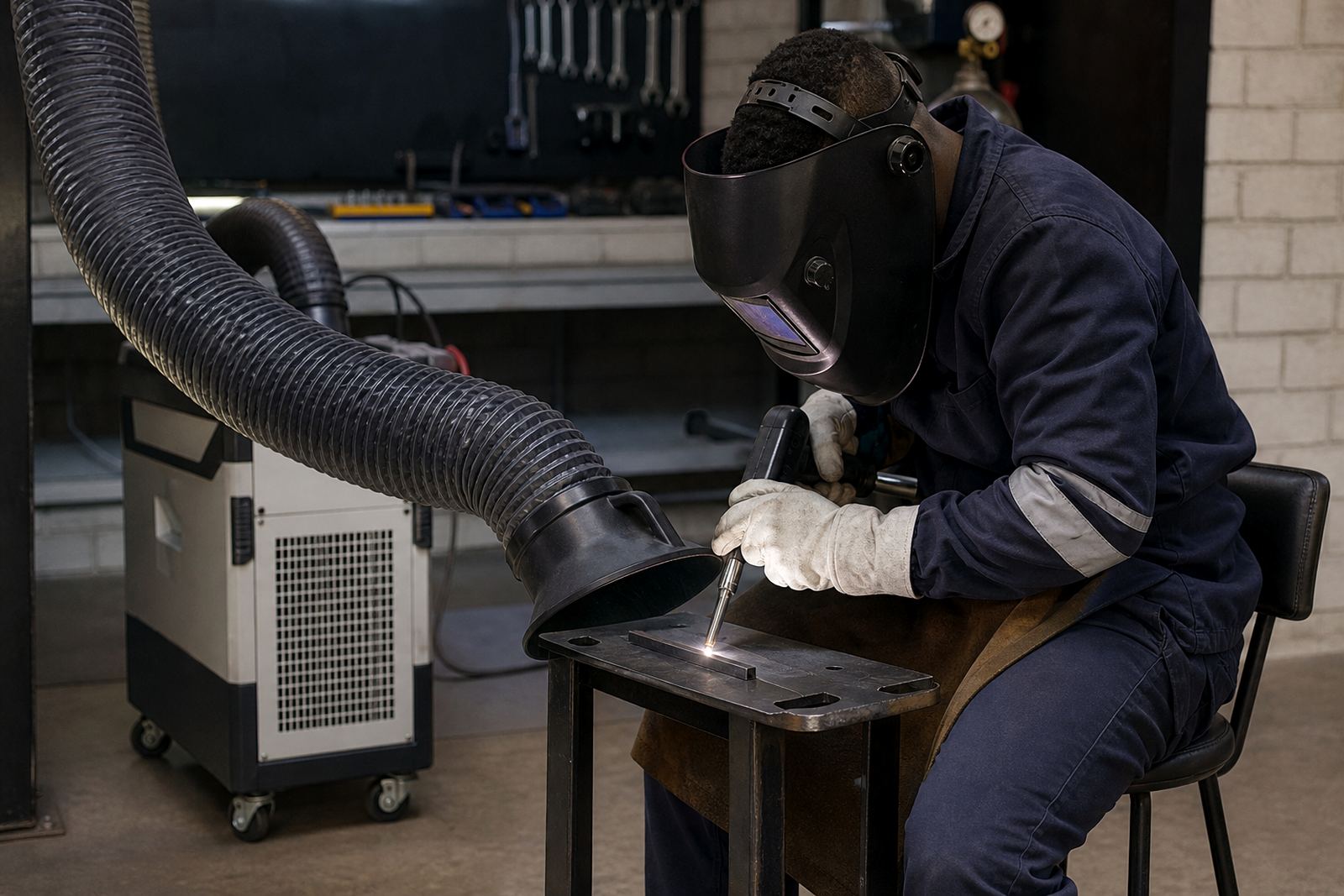
Local fume extraction is about pulling air at the welding point, not only cleaning the room after the fact. For handheld laser welding, that usually means a suction arm, nozzle or capture head placed as close as practical to the plume without interfering with the weld path.
When set up correctly, extraction helps keep the workpiece visible, reduces residue on nearby equipment and lowers the chance of operators breathing in fine dust. It also supports cleaner workshop housekeeping. Less dust on benches and rails means less cleaning time and less chance of contaminating sensitive parts later.
- Place the capture point close to the weld zone
- Keep hoses and arms clear of the operator’s natural movement
- Use extraction before relying on general ventilation alone
- Check filters and airflow regularly, not only when something smells off
In practice, the best setup is the one that fits the job flow. If an operator must keep shifting the extraction unit by hand every few minutes, it will not be used properly for long.
Safety Is Not Only About Eye Protection
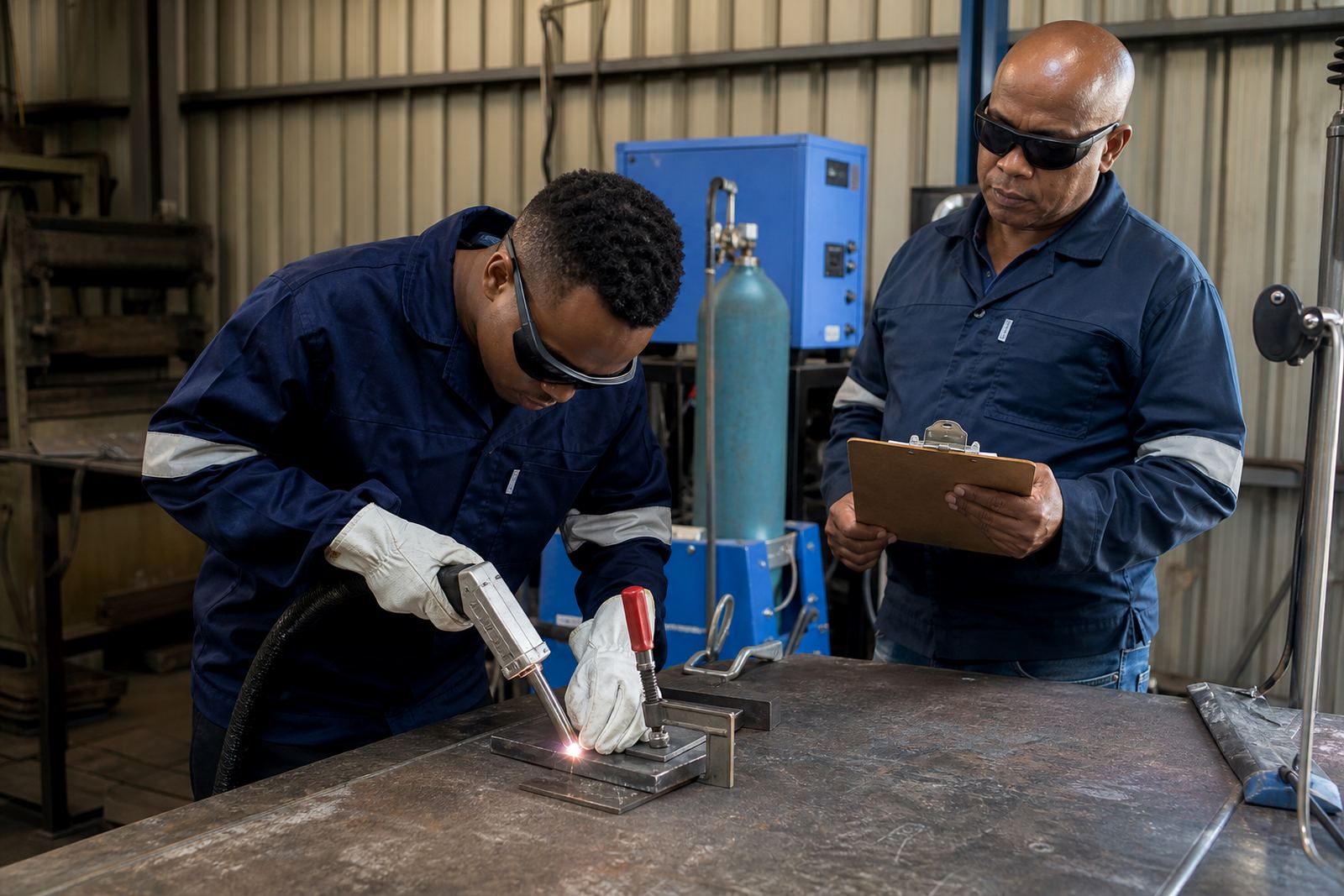
Handheld laser welding is normally used with the correct laser class controls, enclosure habits where needed and strict eye protection. That part is non-negotiable, but extraction sits in the same safety picture. A clean air path helps the operator stay focused, and fewer airborne particles means less irritation to eyes, nose and throat.
Eye protection must match the laser system in use. It should be worn every time, even for short runs or quick tacks. But if the air around the weld is full of dust and fume, people tend to lift visors, lean in too close or rush the job. That is when mistakes happen. Good extraction supports safer posture and better discipline around the tool.
For workshops training beginners, this becomes even more important. New operators often stare too closely at the weld zone or crowd the workpiece. A tidy setup with proper extraction, clear marking and eye protection rules helps them build safer habits from day one.
How Fume Control Helps With Quality and Consistency
Fume extraction is not only about health. It also improves output quality in small but useful ways. When the air is cleaner, the operator can see the weld track more clearly, especially on thin material or reflective surfaces. That makes it easier to hold steady speed and maintain the correct torch angle.
Inconsistent airflow can disturb shielding and create tiny defects around the weld area. If fumes and dust are allowed to drift back across the joint, they can affect surface finish and post weld cleaning. That is a problem when you are trying to keep repeat jobs consistent for workshop clients, fitment work or maintenance tasks.
For teams doing production work, this is where a simple workflow check helps. The extraction unit must not block access, trip operators, or blow air across the weld zone from the wrong side. Little setup issues can cause a surprising amount of rework.
- Clear visibility improves torch control
- Cleaner air supports steadier hand movement
- Better capture reduces surface contamination
- Consistent setup makes repeat jobs easier to train
A Practical Setup for South African Workshops
Local conditions matter. In Gauteng, dust from traffic and workshop floors can mix with welding fumes. In coastal cities like Durban and Cape Town, humidity can affect how particles hang in the air and how fast filters load up. During load-shedding, some workshops switch to backup power and temporary setups, so extraction equipment needs a plan too.
A good workshop setup starts with a site readiness check. Look at where the welding will happen, where people walk, where the doors open and what the air actually does during the day. If the unit sits in a corner with no room for hose movement, it will be awkward to use. If the filter is hidden and never checked, maintenance gets missed.
We often tell learners and supervisors to treat extraction as part of the workflow, not an add-on. That means planning where the table goes, where the cable runs and how the operator will stand during a typical job. If the job changes from one day to the next, the extraction should still be easy to position and switch on quickly.
Starter Kits Need the Same Attention as Big Machines
Starter kits for handheld laser welding are often bought with the focus on the machine, torch, hand tools and consumables. That is sensible, but extraction and basic safety items should be part of the same conversation. A workshop that buys a system without thinking through fumes may save time on the order and lose time later in complaints, cleaning and uncomfortable work conditions.
A practical starter kit setup should consider the full routine from the first day of use. That includes operator induction, a short safety briefing, a place for eye protection, and a way to capture fumes near the job. For learners who are still building confidence, this is a simple way to work cleanly and avoid bad habits.
- Check the laser class and required controls before use
- Keep eye protection ready for every operator
- Match the extraction unit to the size of the work area
- Include filter checks in the weekly routine
- Train new users to position the capture point before welding
That sort of planning is just as useful in a small East Rand repair bay as it is in a larger workshop serving Pretoria, Polokwane or Cape Town.
Build Extraction Into the Training Routine
At LaserWelder Training, we see fume extraction as part of safe workshop practice, not a side note. When people learn handheld laser welding, they should also learn how to set the area up, keep the air moving in the right direction and protect themselves with the right eye protection and work habits.
That is why refresher visits, supervisor coaching and workflow advice matter. A workshop can have good equipment but still miss the basics if no one checks the extraction position, filter condition or operator spacing. A short refresher often fixes what months of bad habit have normalised.
The goal is simple. Keep the weld visible, keep the operator protected and keep the workshop cleaner from one shift to the next. If you do that, the work becomes easier to manage and much safer to repeat.