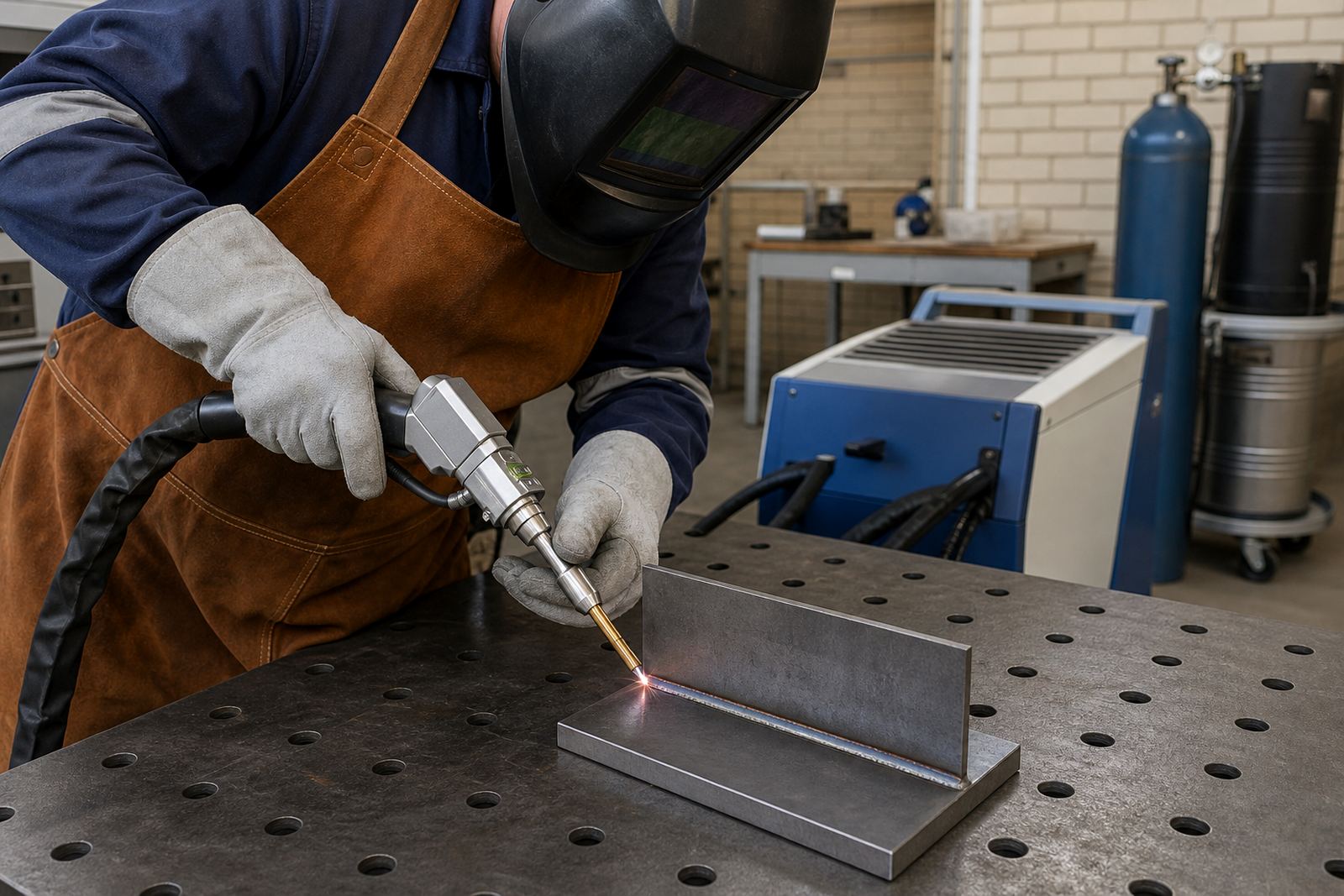
Why A Controlled Laser Area Matters
Handheld laser welding brings speed and accuracy, but it also brings a concentrated beam, heat, bright reflection and fumes that must be managed properly. If people can wander in and out of the work zone, the chance of eye injury, burns or confusion goes up quickly. That is why barriers and access control are not extra nice-to-haves, they are part of normal workshop practice.
In Boksburg and across Gauteng, many workshops share space with grinding, cutting, assembly and loading. When the laser station is left open, another worker can walk in carrying material, look directly at the arc area, or place reflective offcuts too close to the beam path. A controlled area helps stop that kind of mix-up before it starts, especially during busy shifts and load-shedding backed operations where everyone is trying to keep production moving.
Barriers That Match The Job, Not Just The Floor Plan
Good barriers do not need to be complicated. They do need to be clear, stable and placed where they actually guide people away from the active area. A portable screen, marked boundary, or fixed partition can work well if it is used consistently and kept in good condition. The aim is to create a visible boundary around the welding point, the operator stance, the material table and the immediate travel path for the workpiece.
- Use screens or partitions that block direct line of sight to the weld zone.
- Keep the barrier wide enough for the operator to move safely without stepping outside the controlled area.
- Leave a clear path for material handling, but keep casual foot traffic out.
- Check that reflective surfaces, mirrors and shiny panels are not bouncing light back into the work zone.
- If the setup changes for a new job, move the barrier with it, do not just work around it.
For smaller workshops, even a simple gated section can help if it is treated as a proper access point. The key is consistency. A barrier that is moved aside for one urgent job and never returned soon becomes meaningless.
Signs That Tell People What They Need To Know
Signs are only useful when they are easy to read and placed where people naturally look. At a laser welding station, the signs should tell a worker whether entry is restricted, what eye protection is required, and who is allowed to operate or supervise the equipment. In plain terms, signs should answer the question, can I go in here or not?
A good sign set should be short and practical. Keep the wording simple so a casual visitor, contractor or new hire can understand it without asking three people. That matters in mixed-language workplaces, and it matters even more when a supplier drops off parts and thinks they can step inside for a quick look.
- Entry restricted during active laser welding.
- Laser eye protection required inside the marked area.
- Authorised staff only beyond this point.
- Fume extraction must be on before work starts.
- Report damaged screens, missing signs or loose cables at once.
Signs should also stay visible when the workshop lights change, especially in spaces running on backup power. If the room gets darker during load-shedding, the sign needs to remain readable and the boundaries need to stay obvious.
Controlled Access For Staff, Visitors And Contractors
Access control is the routine that backs up the barrier and sign. It decides who can enter, when they can enter and what they must do before they enter. Without this, even a well-marked area can become unsafe because people start assuming the rules bend when the job is urgent.
For active welding sessions, the operator, the supervisor and any trained support person should know the process before work begins. Visitors should stay out unless they have a clear reason to enter and have been briefed first. Contractors, delivery staff and maintenance teams often create the most risk because they are focused on their own task and not on the laser setup.
It helps to use a simple routine that everyone follows:
- Check that only trained staff are inside the controlled area.
- Pause work before moving barriers or bringing in new material.
- Keep the access point closed when the laser is in use.
- Brief visitors before they step near the work zone.
- Log any unusual access or near miss so it can be corrected later.
Safety Controls Around Eye Protection And Fume Extraction
A controlled area should support the other safety controls, not sit beside them as if they are separate. Laser eye protection must match the task, and it should be worn by anyone who is close enough to be exposed. The same goes for fume extraction. If fumes drift through a doorway or across a busy aisle, the barrier alone is not doing enough.
Good area control helps by keeping the operator in the right place and the extraction arm or capture point near the source. This is important when welding stainless steel, coated parts or material that gives off stronger fumes. In a workshop with coastal humidity, dust and moisture can also affect how clean the area stays, so housekeeping matters too. Clean floors, clear walkways and tidy cable runs lower the chances of trip hazards and make the whole station easier to manage.
Think of area control as part of the full system. It protects the eyes, it helps contain fumes and it keeps the operator from working in a cramped or rushed position. That extra space around the station can make a real difference when setting up a new learner or handling a first-time job.
A Boksburg Example From A Busy Workshop Floor
A small fabrication workshop in Boksburg may have one bay for assembly, one for grinding and one for handheld laser welding. If those spaces overlap, the team can quickly run into trouble. One worker may need to fetch material, another may be checking a finished frame and a third may be setting up the laser unit. Without a controlled area, people end up crossing paths, and the operator is forced to stop and restart too often.
A better layout would use a marked laser zone, a simple barrier and a clear entry point beside the operator. The supervisor can keep a short induction in place for new staff, while the safety officer checks that eye protection is available and the extraction unit is working before the shift begins. That does not slow the job down. It makes the job easier to run, especially when the workshop is handling quick turnaround work and the team is under pressure.
For learners, this kind of setup is also useful because it builds good habits from the start. They learn that safe area controls are not a paperwork exercise. They are part of how a professional workshop stays organised, calm and ready for real work.
Keep The Controls Fresh, Not Forgotten
Barriers, signs and access rules only work if they are checked often. A broken screen, faded sign or open gate can undo the whole setup. Regular walkthroughs help spot those weak points before they turn into a problem. This is where refresher visits, supervisor coaching and a short training document pack can make a practical difference, because the team has something clear to follow.
As jobs change, the safe area may need to change too. New jigs, larger components or different lighting can all affect how the space should be controlled. The aim is not to create a rigid setup that nobody can use, but a working arrangement that matches the tasks being done. When the controls are simple and visible, people follow them. When they are buried in a file or left to memory, they get missed, sometimes completely.
A well-run laser station should feel orderly, not restrictive. That is the whole point. People can work efficiently when they know the boundary is clear, the right staff are inside and the risks are being handled in a practical way.