
Why short sessions beat a long, tired push
Many new learners try to do too much in one stretch. With handheld laser welding, that usually shows up as shaky torch control, poor joint tracking and rushed checks before the next bead. Short sessions work better because the operator stays alert, the eyes are fresher and small mistakes are easier to spot before they become habits.
At our Boksburg base, we see this often with learners who come in after a full day at work. They are eager, but their concentration drops fast when they try to run one long block. A better plan is 20 to 40 minute practice periods with a clear target, then a break to review what went well and what needs correction. That way, each repetition has a purpose.
Repeated short sessions also help with muscle memory. You learn where to hold the torch, how fast to move and how to keep a steady gap without forcing it. Over time, that rhythm becomes natural and confidence starts to show in the quality of the welds, not just in how the operator feels.
What a beginner should practise first
Before moving to complex joints, beginners should focus on the basics that make every weld more predictable. That includes torch position, travel speed, angle control and seeing how the pool responds to small changes. If those habits are not settled early, later work becomes harder to correct.
We advise learners to practise on offcuts of the same thickness they will use in real work. Mild steel, stainless steel and aluminium each behave differently, so the settings and hand movement must match the material. A short session on one material is more useful than jumping between three metals in the same morning.
- Start with straight runs on flat pieces before moving to corners or repair work.
- Check fit-up carefully so you are not trying to fix a bad gap with speed alone.
- Use the same stance and grip each time to keep movements consistent.
- Record settings and results so the next session begins with better information.
Safety habits should be repeated every time
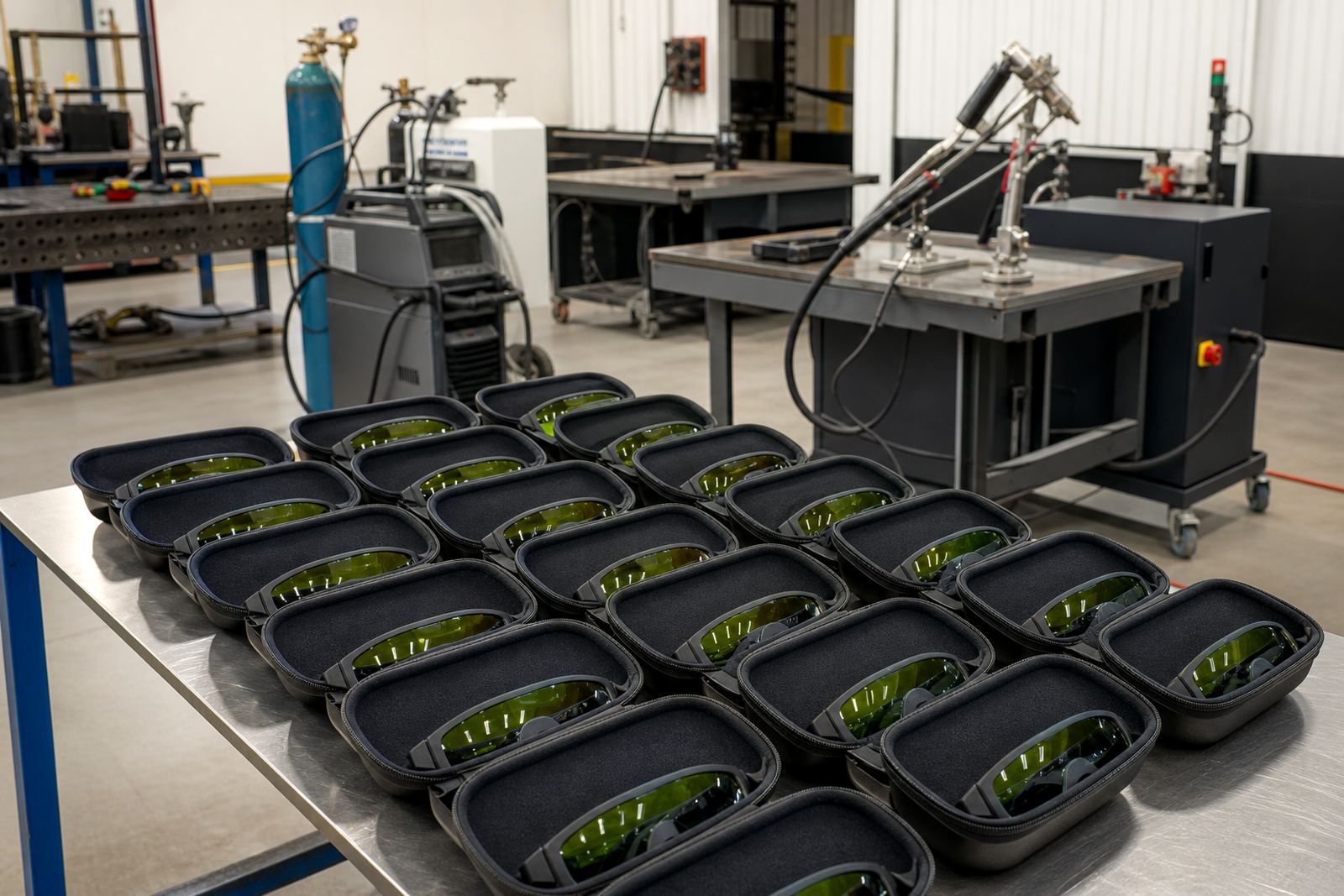
Practice is only useful when it is safe. Handheld laser welding uses concentrated light, so the operator must treat eye protection as non-negotiable. The laser class of the unit, the work area and the viewing angle all matter. Learners should never rely on guesswork when it comes to shielding, curtains or access control.
Fume extraction matters too, especially in enclosed workshops and during long repair jobs. Some materials release fine particles or vapour that should not be left hanging in the air. In coastal areas like Durban, humidity can also change how dust and residue settle around the work area, so it helps to keep the space clean and the extraction checked before every session.
Good practice is not just about the weld. It includes cable checks, lens care, keeping flammables away and making sure bystanders do not stand too close. When these steps are repeated until they become routine, the learner stops wasting energy on worry and can focus on the weld itself.
A simple routine for learner progress
A short routine makes practice easier to manage, whether the learner is in Boksburg, Johannesburg or Pretoria. The goal is to keep each session narrow enough to measure and broad enough to build real skill. That also helps workshops fit training around production work and load-shedding windows.
One practical routine is to begin with a safety check, then do a brief setup review, followed by a small number of test welds. After that, inspect the results, note any change in speed or angle and repeat only the part that needs work. This is far better than making a long batch of welds and hoping for the best.
- Review PPE, extractor flow and work area clearance before switching on.
- Use one joint type per session, such as butt, lap or corner.
- Stop after a few runs and inspect the finish under good light.
- Keep notes on settings, material prep and any defects seen.
- End with a clean-up so the next session starts properly.
Starter kits help practice stay consistent
Starter kits are useful when they are set up for real learning, not just display. A good kit gives the learner the basic items needed to practise safely and repeat the same process without scrambling for missing parts. That usually includes the welding unit, suitable protection, basic accessories, consumables and simple items for test pieces.
For workshops across South Africa, from Polokwane to Cape Town, a starter kit should also be easy to store and simple to reset after each use. That matters when multiple learners share the same space. If the equipment is packed away between sessions, the setup must still be quick enough that practice does not get skipped because of time.
Our starter kit setup support is often about making the routine practical. Learners need to know how to place the unit, where to stand, how to protect the eyes and how to keep the area ready for the next person. When that part is sorted, confidence grows faster because the learner is not fighting the setup each time.
Local workshop example: Boksburg to the rest of Gauteng
In a busy East Rand workshop, a supervisor may only have a few quiet windows in the day. Instead of waiting for a full free afternoon, the team can use short sessions before the next job starts or after a machine is cleared. That approach works well in Boksburg where commercial work often has to continue around deliveries, power interruptions and tight turnaround times.
One learner might spend the first week practising torch movement on offcuts, the second week focusing on simple joints and the third week doing guided repeat runs with a supervisor watching for consistency. By the time they move to real production work, they are less likely to rush the first pass or freeze when the fit-up changes slightly.
This same approach works for businesses in Durban, Cape Town and Polokwane too. The place changes, but the principle stays the same. Short, regular practice builds a steadier operator than a long session done once in a while. It also helps the team keep safety front and centre, which matters in every workshop.
What completion should look like
Confidence is not pretending that every weld will be perfect. It is being able to repeat the right steps without needing constant prompting. When a learner reaches that point, they should know how to prepare the work, carry out a safe welding sequence, spot obvious defects and decide when to ask for help.
At LaserWelder Training, learners complete the course with a certificate of completion from LaserWelder Training only. That certificate reflects training completed, but the real value is the practical ability behind it. The learner leaves with better judgement, safer habits and a clearer idea of how to keep improving on site or in the workshop.
For businesses, that means less wasted material, fewer avoidable mistakes and better control over the training process. For individuals, it means the next job feels less daunting because the basics have been repeated enough to stick.