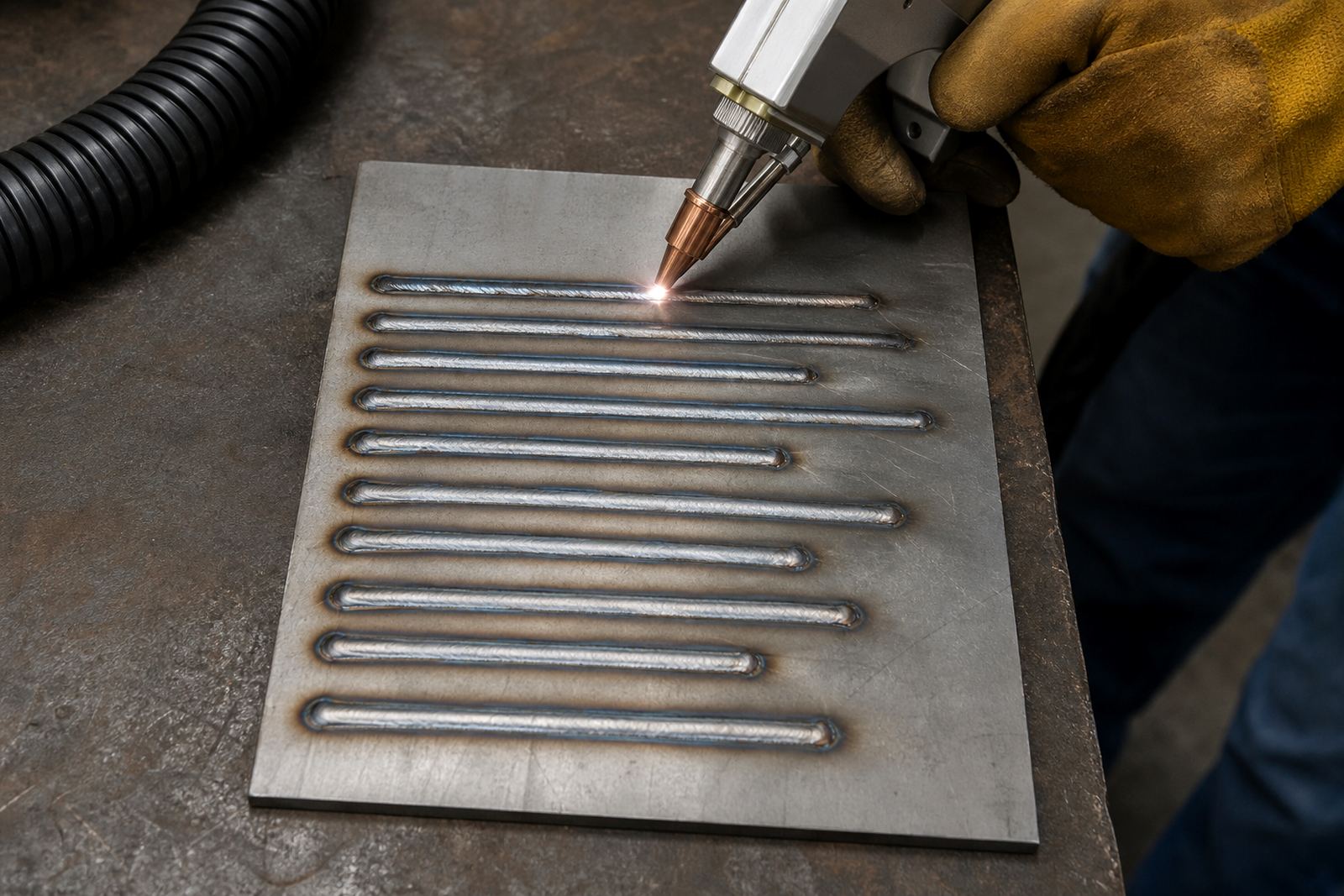
1. Starting Without Proper Safety Habits
One of the first mistakes beginners make is treating handheld laser welding like ordinary workshop work. The beam, reflections and hot metal all need respect from the first minute. A suitable laser class, correct eye protection and controlled access to the area are not optional extras. They are part of the job.
In many South African workshops, the real problem is that a new operator gets a machine, a torch and a few scraps of metal, then starts trying to weld before the safety routine is fixed. That is when people forget to close off the area, stand too close to reflective surfaces or use the wrong protective lenses. Fume extraction is just as important, especially where mild steel, galvanised sheet or coated material is involved.
- Check the laser class and use the correct controls for that equipment.
- Wear eye protection matched to the work being done.
- Keep extraction running before and during welding.
- Remove reflective loose items from the bench and floor.
2. Chasing Speed Before Control
Beginners often want fast results too soon. They move the torch quickly, skip the pause needed for puddle control, then wonder why the bead looks thin or uneven. Handheld laser welding rewards control more than speed at the start. A steadier travel speed, correct angle and consistent standoff distance usually produce better results than trying to work fast.
At our Boksburg training base, we see this often with learners who have done general workshop work but are new to laser welding. Once they slow down and watch how the joint reacts, the quality improves quickly. The trick is to focus on one variable at a time, not all of them at once.
- Keep a steady hand and avoid sudden wrist movement.
- Use short practice runs instead of long random passes.
- Watch the joint line, not just the torch nozzle.
- Build speed only after the bead shape is stable.
3. Ignoring Material Prep and Fit-Up
Clean metal matters. A common beginner mistake is assuming the machine will make up for rust, paint, oil or poor fit-up. It will not. If the joint has gaps, dirt or heavy scale, the weld becomes harder to control and the finish can suffer. Beginners also forget that different metals and thicknesses behave differently, especially when working on thin sheet or small brackets.
In practice, good prep saves time. A few minutes spent on cleaning, clamping and checking alignment usually prevents a lot of rework later. This is especially useful in busy workshops in Johannesburg, Pretoria or Durban where jobs often need to move through the day without wasted handling.
- Clean the joint area to bare, sound metal.
- Clamp parts so they stay aligned during the weld.
- Check the gap before starting, not after the first pass.
- Separate practice coupons by thickness so results are easier to compare.
4. Using the Wrong Settings for the Job
Another early mistake is copying settings from someone else and assuming they will work on every job. Power, speed, focus and shielding behaviour all interact with the material being welded. What works on a thin bracket may not work on a thicker plate, and what works on clean mild steel may not suit galvanised material or a corroded repair.
Beginners should learn to make small changes and read the result. If the weld is too wide, too shallow or overheating the edges, the problem may be in the setup, not the operator's hands. Structured practice helps because each test piece teaches one lesson at a time, instead of turning the workshop into guesswork.
- Change one setting at a time and note the result.
- Use the same base material for a full practice run.
- Keep simple written records of what worked.
- Ask for a supervisor review before moving to live work.
5. Poor Habits Around Starter Kits and Maintenance
Starter kits are useful, but only if the operator understands what each part does and how to keep it in working order. A beginner may treat the kit as extra hardware rather than a working set of tools. That leads to dirty lenses, worn consumables, blocked airflow or loose fittings that affect the quality of the weld. In coastal areas like Durban or Cape Town, humidity can also make storage and care more important.
Basic upkeep is part of good workshop discipline. Clean parts, dry storage and regular checks help keep the kit ready for the next job. Our starter kits are intended for learners and workshops that want a practical way to support day to day practice, setup and familiarisation with the equipment.
- Store consumables in a dry place away from dust.
- Check cables, fittings and air flow before use.
- Clean the kit after practice sessions.
- Replace worn items before they affect weld quality.
6. Why Structured Practice Works Better Than Guesswork
The fastest way to improve is not to weld more at random, it is to practice with a plan. A good practice plan breaks the work into clear steps: safety briefing, machine setup, test pieces, review and repetition. That approach helps beginners recognise what changed when the result changes. It also makes it easier for supervisors to coach new operators without confusing them.
For businesses in Gauteng and across South Africa, this matters because new staff often need to fit into existing production routines quickly. A structured course, followed by refresher visits or supervisor coaching, helps reduce avoidable mistakes and keeps the team working from the same standard. At our Boksburg base we also support site readiness checks, workflow advice, practice plans and a training document pack so the learning does not end when the class finishes.
Many beginners expect perfection too soon. In reality, clean repetitions, patient correction and a proper safety routine do most of the work. The operator who learns to slow down, check the joint and review the result usually progresses faster than the one who tries to force every weld in one go.
7. A Local Example From a Small Gauteng Workshop
A common situation is a small repair workshop in Boksburg or the East Rand taking on a learner who has never used handheld laser welding before. The pressure is usually on to get moving quickly because customers are waiting and the day is already full. Without guidance, the learner may rush the setup, forget extraction or try to copy a setting from another job. The result is wasted material and a frustrated team.
With short operator inductions, a proper safety briefing and a practice plan, that same learner can settle in much faster. The supervisor knows what to check, the operator knows what to watch for, and the workshop gets a cleaner handover from training to daily work. That is the real value of structured practice: fewer surprises, better judgement and steadier results over time.