What the Thin Sheet Module Covers
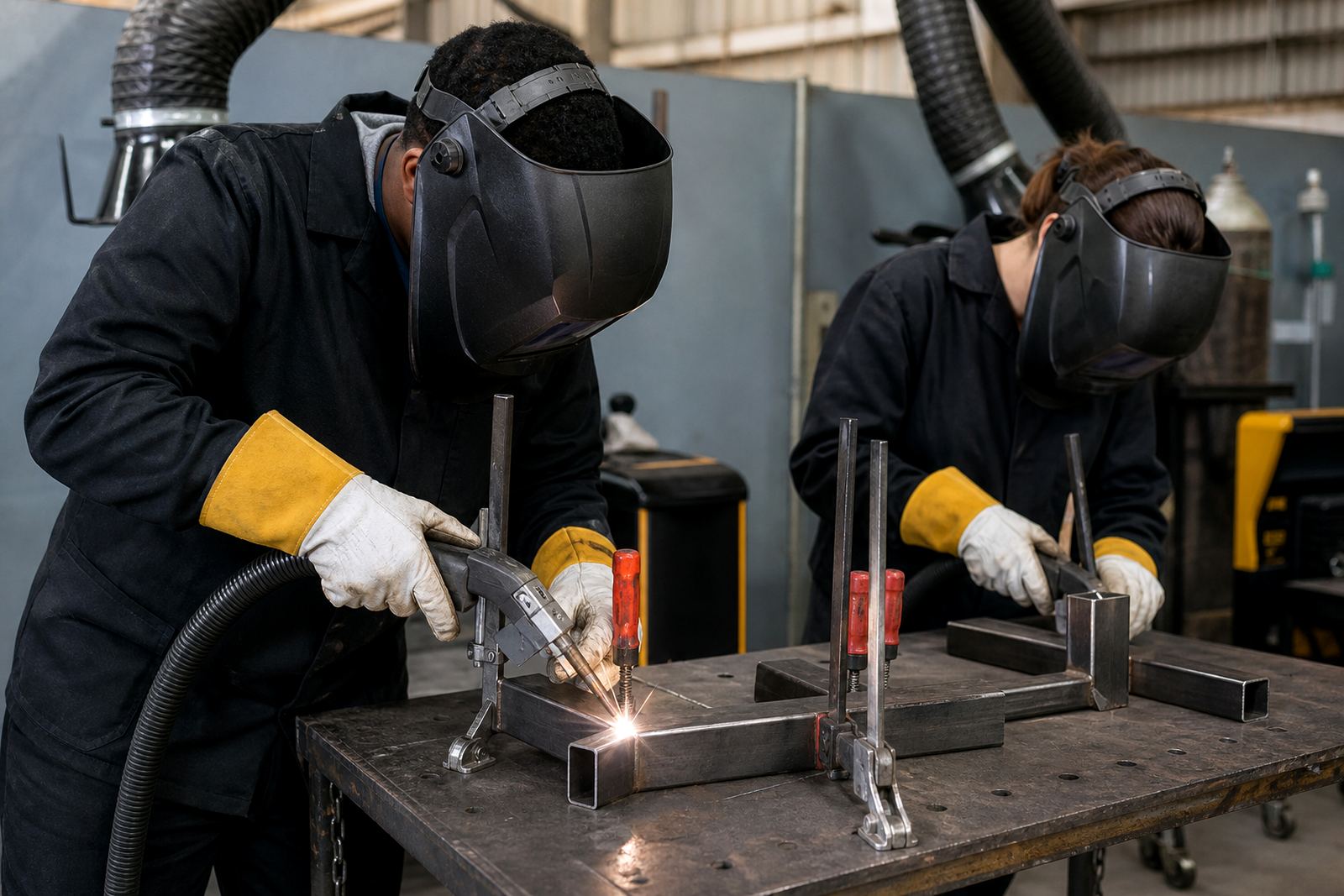
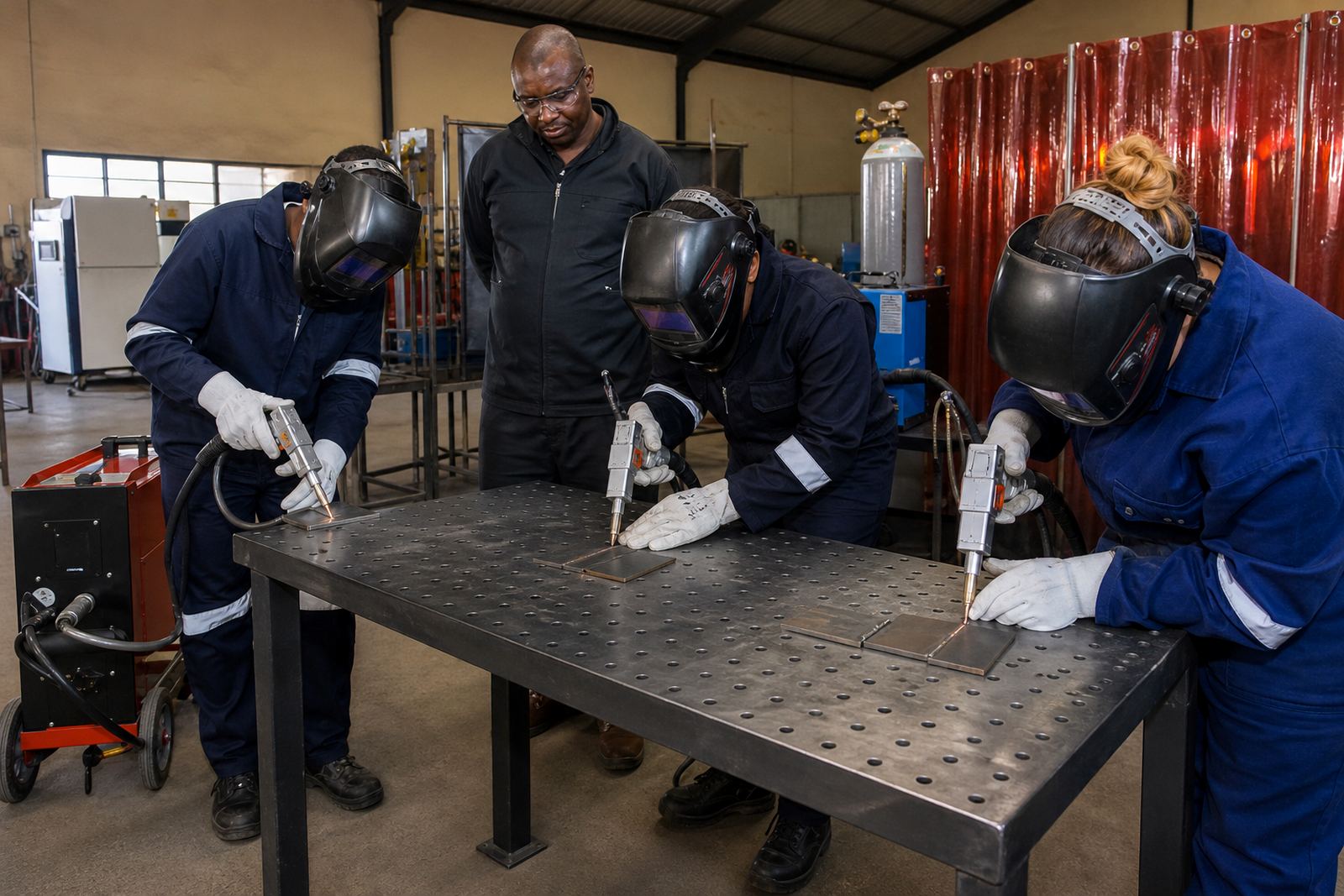
This skills module trains learners to handle thin material with more control, especially where a small mistake can pull a panel out of shape. The emphasis is on heat input, joint fit-up, travel speed and keeping the weld pool stable on light-gauge steel and compatible thin sections. It is practical work from the first session, with guided practice on short seams, edge joints and small repairs.
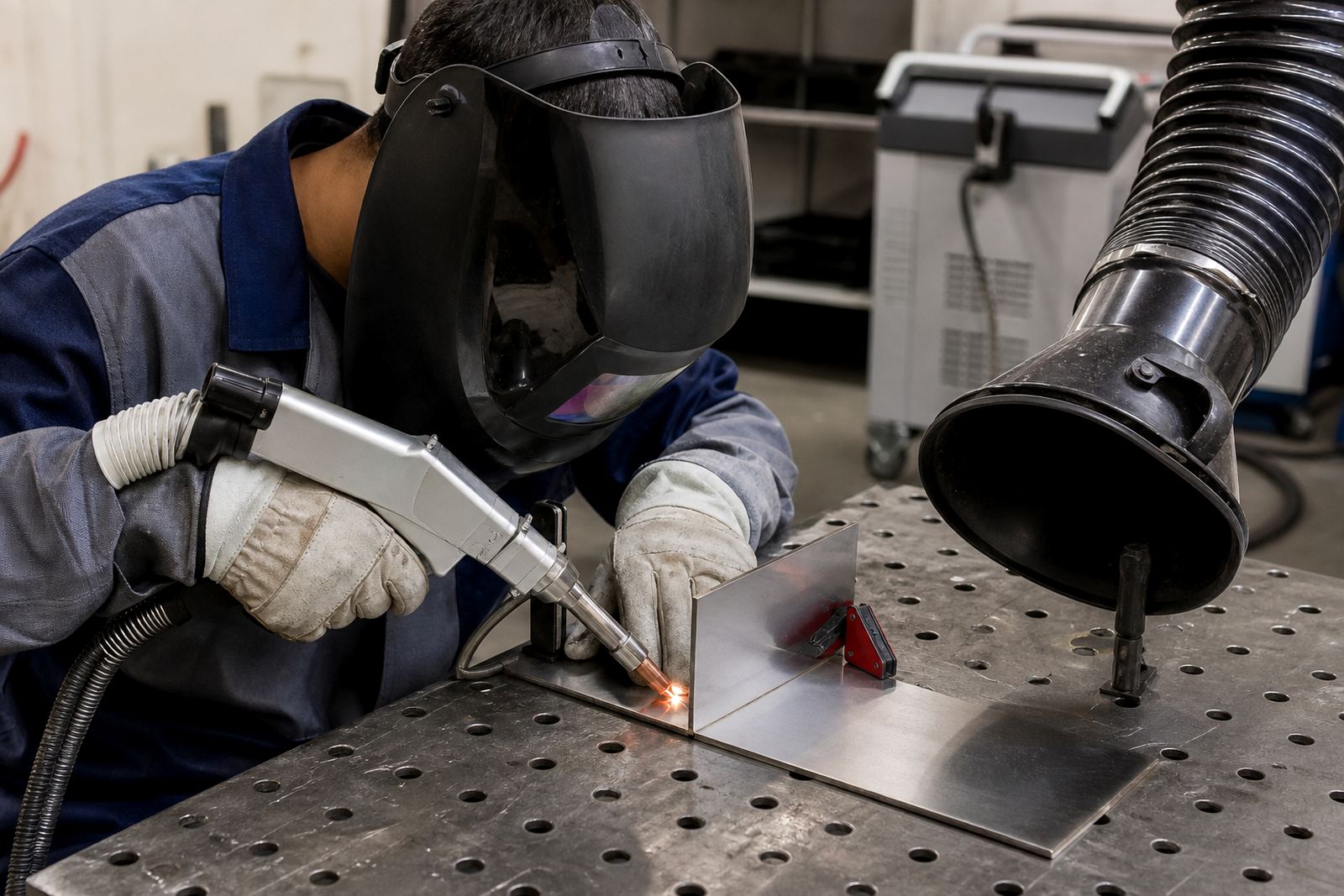
Handheld laser welding is useful on thin parts because the beam can be directed accurately and the heat affected zone is usually smaller than with heavier conventional processes. That said, thin sheet still needs careful preparation. Clean surfaces, tight gaps and steady hand movement matter a lot. Learners also get used to spotting the early signs of distortion before it becomes a problem, which saves time and material.
- Focus on thin sheet control and distortion awareness
- Steady travel technique for light parts and short runs
- Joint fit-up and prep for cleaner finishing
- Practical guidance for workshop use in South Africa
Sizes, Options and Typical Material Range
The module is built for workshop reality, where parts are not all the same and material thickness can change from one job to the next. It suits learners working with thin sections from about 0.6 mm up to 2.0 mm in most training situations, depending on the joint type, material cleanliness and machine setup. We can also guide learners on slightly heavier practice pieces where the same control principles still apply.
Options can be matched to the learning level and the work being done. A beginner may need more time on tack placement and seam control, while an experienced operator may want more focus on distortion correction and repeatability. For businesses, the module can be aligned to the parts they handle daily, such as guards, covers, brackets, panels and small frames. The aim is to make the technique useful in the shop, not just in a class room.
- Suitable for beginners and operators building confidence
- Common practice thickness: 0.6 mm to 2.0 mm
- Works well for small panels, brackets, covers and repairs
- Can be adapted for workshop specific parts
Where It Fits in a Workshop
This module suits fabrication shops, maintenance teams, light engineering workshops and businesses that repair or assemble thin components. It is also useful for learners who will be working on agricultural parts, general steelwork, automotive panels, signage frames and custom fittings. In places like Johannesburg, Pretoria, Durban, Cape Town and Polokwane, where workshops handle a mix of repair and production work, thin material control can make a real difference to finish quality.
The module is especially helpful when a job has limited tolerance for warping, ripple or burn-through. Thin sheet work often needs calm pacing and good preparation because rework costs money. In coastal areas, stored material can also pick up moisture and contamination, so surface cleaning and proper storage become part of the routine. If the workshop runs during load-shedding windows, the team also needs a simple plan for machine checks, gas readiness and safe shutdown between sessions.
- Useful for repair shops and production benches
- Fits light engineering and maintenance work
- Practical for inland and coastal workshops alike
- Helps reduce rework on parts that can distort easily
Installation, Power and Gas Needs
The Thin Sheet Module itself is a training programme, but the work it supports depends on a proper workshop setup. A handheld laser welding station normally needs a stable electrical supply, suitable cooling where required and enough space for the operator to move safely around the part. For thin sheet work, a clean bench, good clamping and a tidy cable route are just as important as the machine settings.
Gas requirements depend on the material and the setup, but shielding gas is commonly used to support weld quality and reduce oxidation. Learners are shown how to check gas flow, nozzle condition and line connections before starting. The workspace should also have fume extraction in place, because even light welding on coated or dirty material can produce fumes that should not be breathed in. Eye protection rated for laser work is non-negotiable. Laser class awareness is part of the module, and the operator must know the controlled area, warning signage and safe approach distances.
- Stable power supply and safe shutdown routine
- Shielding gas checks and leak awareness
- Fume extraction for cleaner workshop air
- Laser eye protection and controlled access around the work area
Care, Servicing and Day to Day Use
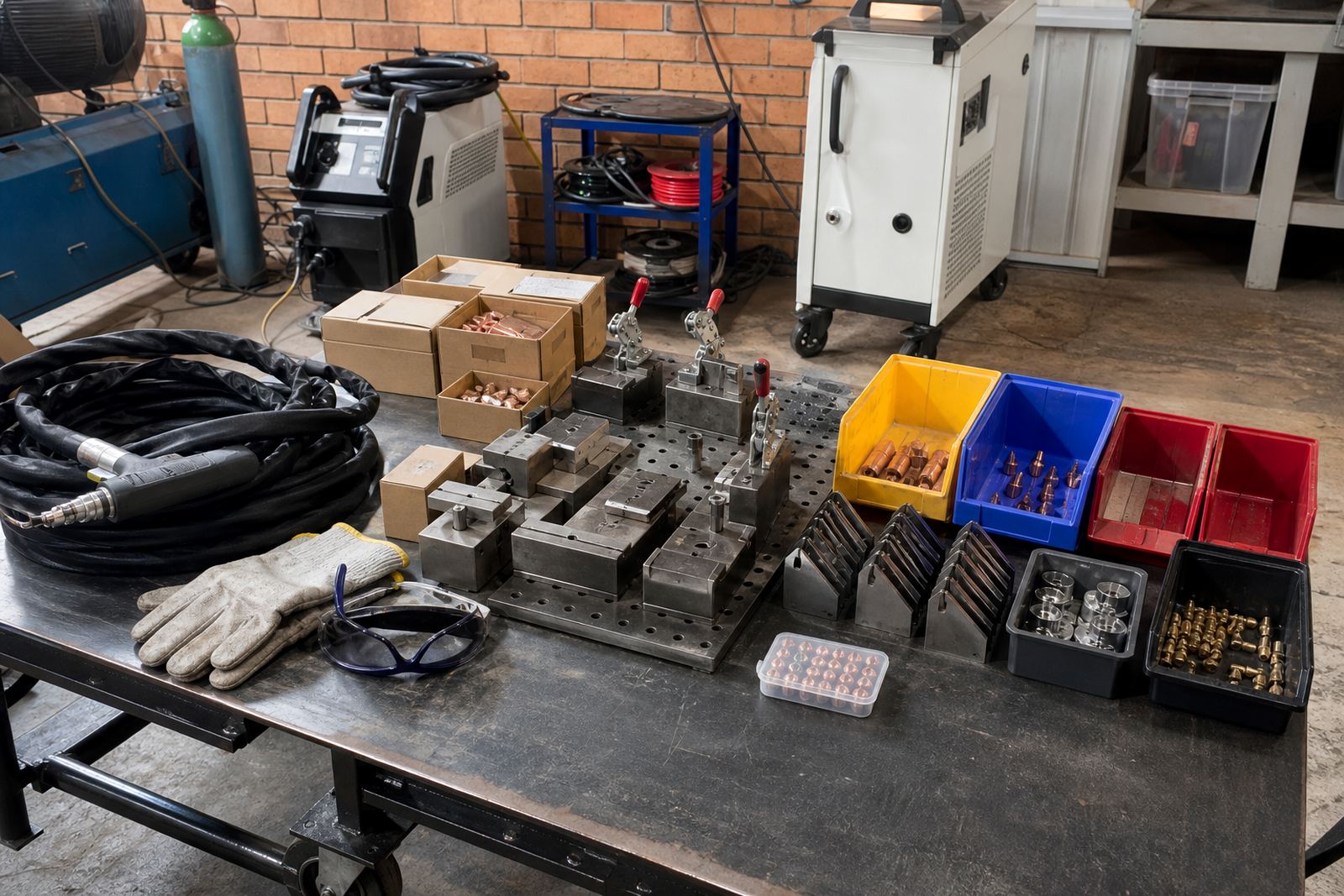
Thin sheet training works best when the equipment is kept clean and checked regularly. A dirty lens, worn nozzle or loose consumable can affect beam quality and make thin material harder to control. Operators should inspect the handpiece, cable routing, gas connections and safety interlocks before each session. If the machine is shared between shifts, a simple handover sheet helps prevent missed faults.
Routine care also includes keeping dust away from the work area, storing consumables correctly and checking that clamps and fixtures are still holding parts square. On thin sheet, even slight movement during a run can cause a poor finish. Workshops should also keep a record of any servicing, even basic checks, so faults are picked up early rather than after a failed job. A small slip in setup can cause more work later, so consistency matters.
- Check optics, nozzle and handpiece condition regularly
- Keep clamps, fixtures and benches clean
- Use a handover record for shared equipment
- Plan servicing before faults affect output
What to Check When Ordering
When ordering the Thin Sheet Module for a learner or a business, it helps to confirm the main application first. Let us know what material thickness is being handled, what type of joints are common and whether the team will use the module for repairs, production or both. It also helps to say if the workshop needs support with starter kit setup, consumables planning or a refresher visit after the first training round.
For businesses in Boksburg, Johannesburg, Pretoria, Durban, Cape Town and Polokwane, local workshop conditions matter too. A site with poor lighting, limited bench space or inconsistent power may need extra planning before training starts. Our team can advise on operator inductions, safety briefings, workflow advice and training document packs so the module fits the actual shop floor. If you are unsure, send the details through the enquiry form on our contact page and we will help you work out the right setup.
- Confirm material thickness and joint type
- Note whether the work is repair or production based
- Check power, gas and space on site
- Ask about starter kit setup and follow-up support
Key facts
| Module focus | Thin material control, distortion awareness and steady travel |
|---|---|
| Typical material range | About 0.6 mm to 2.0 mm, depending on joint and setup |
| Training format | Hands-on instruction with practical welding exercises |
| Safety elements | Laser class awareness, eye protection and fume extraction |
| Workshop fit | Light engineering, repairs, panels, brackets and covers |
| Output | Certificate of completion from LaserWelder Training only |