What the Beginner Laser Course covers
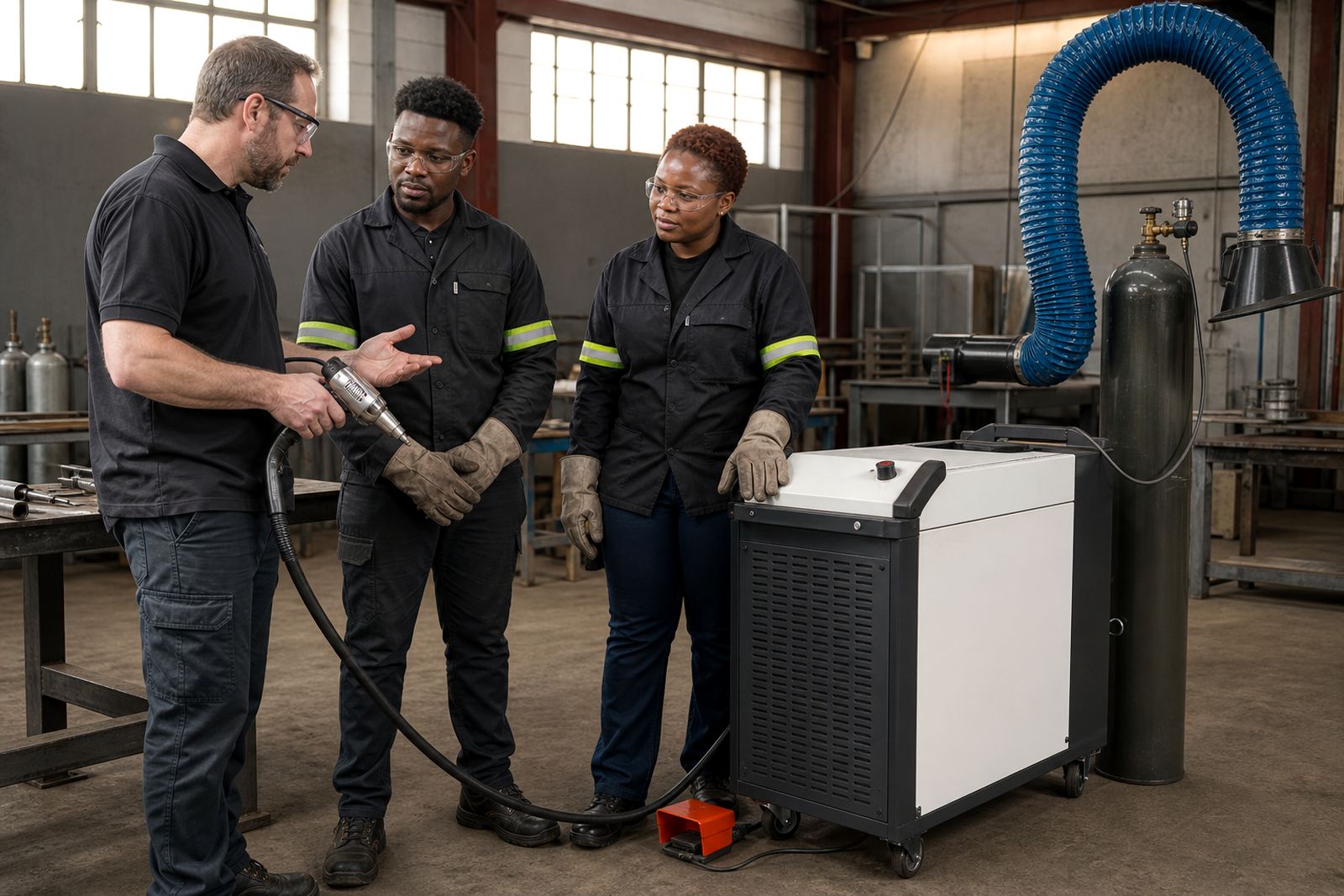
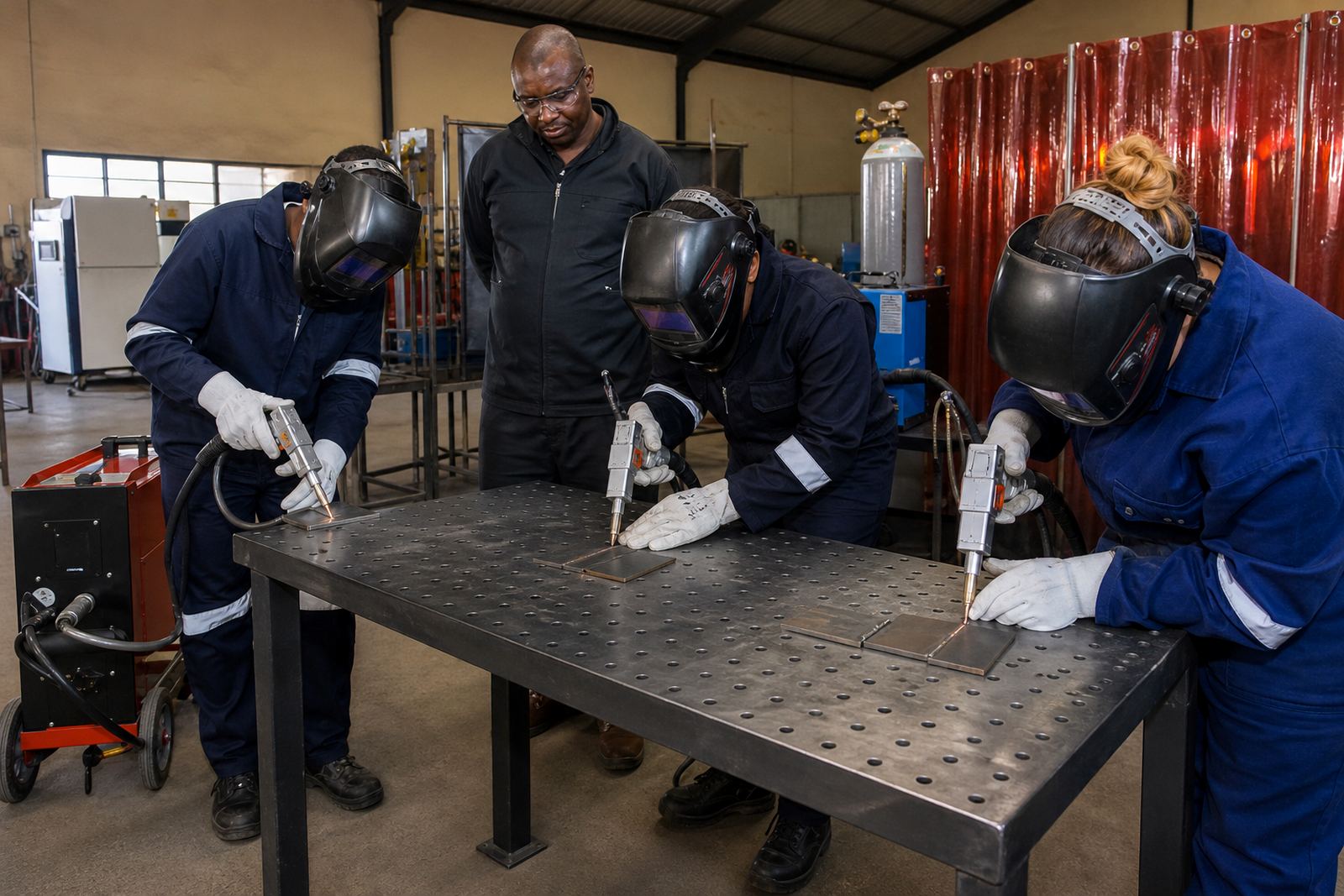
This course is built for people who are new to handheld laser welding or moving over from traditional welding methods. We start with the basics of how the handheld unit works, how the beam interacts with metal, and what affects weld quality on mild steel, stainless steel and aluminium. The focus is on practical control, not theory alone, so learners spend time setting up, testing and correcting their technique under supervision.
By the end of the course, learners should understand joint preparation, fit-up, travel speed, angle control and how to keep a stable hand when welding in a workshop setting. The course is run from our Boksburg base and is also relevant for teams in Johannesburg, Pretoria, Durban, Cape Town and Polokwane who need hands-on instruction that can be applied straight away.
- Handheld laser welding basics
- Joint preparation and surface cleaning
- Travel speed, hand control and bead consistency
- Setting up for common workshop jobs
- Certificate of completion on successful finish
Who this course suits on the shop floor
The Beginner Laser Course suits new operators, production staff, workshop assistants and business owners who want to understand the process before buying equipment or sending staff onto the floor. It also works well for teams that need a common standard, especially where more than one person may use the machine across different shifts. If your work involves repairs, light fabrication, maintenance or small batch production, this course gives a practical base.
We keep the class small enough for questions and correction. That matters because handheld laser welding can look simple from the outside but it still needs proper technique, discipline and a calm pace. Learners often come in expecting speed alone, then learn that preparation and consistency matter just as much as power. That shift in thinking helps with better joints and fewer reworks.
- Beginners with no prior laser welding experience
- Small workshop teams needing shared operating methods
- Businesses adding handheld laser welding to existing services
- Supervisors who need to understand the process before training staff
Course format, sizes and training options
The course is arranged as a practical hands-on session with enough time to repeat movements and build confidence. We can advise on the right group size based on the type of work being done and the level of support needed. Smaller groups allow more one-on-one correction, while larger groups are better suited to general induction and workflow alignment. A learner who needs extra time for control can benefit from a slower pace and more repeat practice.
We also offer training support for businesses that want operator inductions, supervisor coaching, practice plans and refresher visits after the first round of use. For workshops that are setting up a new process, this helps bridge the gap between training day and daily production. It also gives the team a clearer routine for switching between welding tasks, checking the work and keeping the machine ready for the next shift.
- Individual learner option
- Small team training option
- Workshop induction format
- Refresher support after initial use
Installation, power supply and workshop setup
Handheld laser welding systems need a suitable workshop environment, stable power and enough space for safe operation. Before training or ordering a starter kit, it helps to confirm the power supply, ventilation and layout around the machine. A clean, dry space is important, especially in coastal areas where humidity can affect storage and consumables. In busy Gauteng workshops, it also helps to keep the work area clear so the operator can move safely around the bench and part handling area.
Most setups need a proper electrical supply with enough capacity for the machine and any supporting equipment. The exact requirements depend on the unit, but learners should always check the available power, plug type and breaker capacity before installation. You also need fume extraction or other suitable ventilation, because welding fumes must be managed properly even on smaller jobs. For many workshops, load-shedding planning is part of the setup too, so it makes sense to think about backup power and safe shutdown steps ahead of time.
- Confirm electrical supply and breaker capacity
- Allow space for safe part handling and movement
- Use proper ventilation or fume extraction
- Keep consumables and cables stored dry
Safety rules every beginner must follow
Safety is part of the course from the first lesson. Handheld laser welding equipment must be treated with care, because the beam can injure eyes and skin if used incorrectly. We cover laser class awareness, correct eye protection, safe positioning and how to keep other people out of the working zone. Learners are also shown how to recognise reflection risks from shiny surfaces and how to set up the work area so the beam path stays controlled.
Fume extraction is just as important. Even with a small torch style unit, the process can create fumes that should not be left hanging around the operator. We explain practical ways to keep the area clear, how to place extraction near the weld point, and what to do if the workshop ventilation is weak. A safe process is not only about compliance, it also helps the learner work with more confidence and less fatigue.
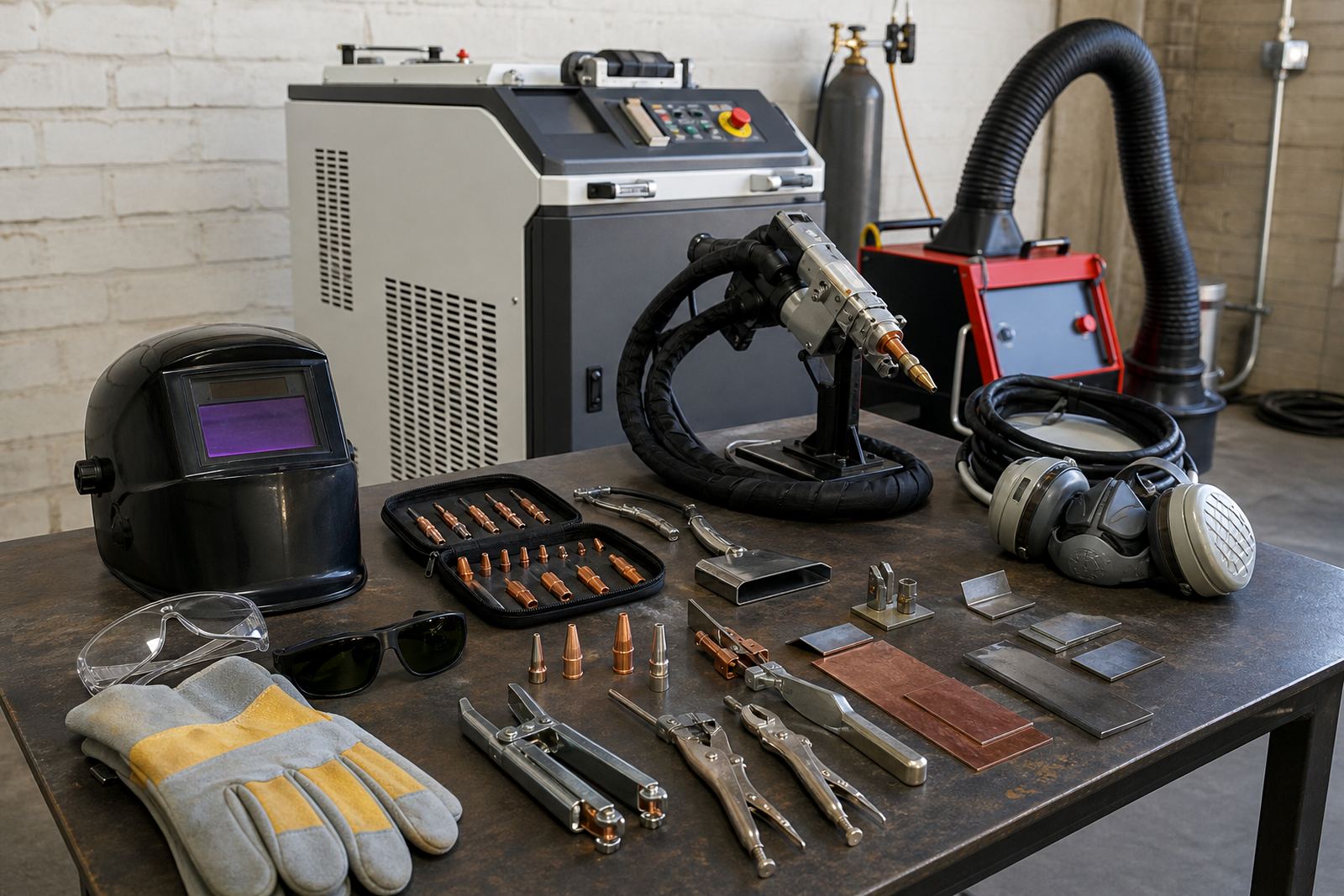
- Wear the correct eye protection for laser work
- Keep the working area controlled and marked
- Use fume extraction or suitable ventilation
- Never point the beam at reflective scrap or open surfaces
Starter kits, servicing and what to check before ordering
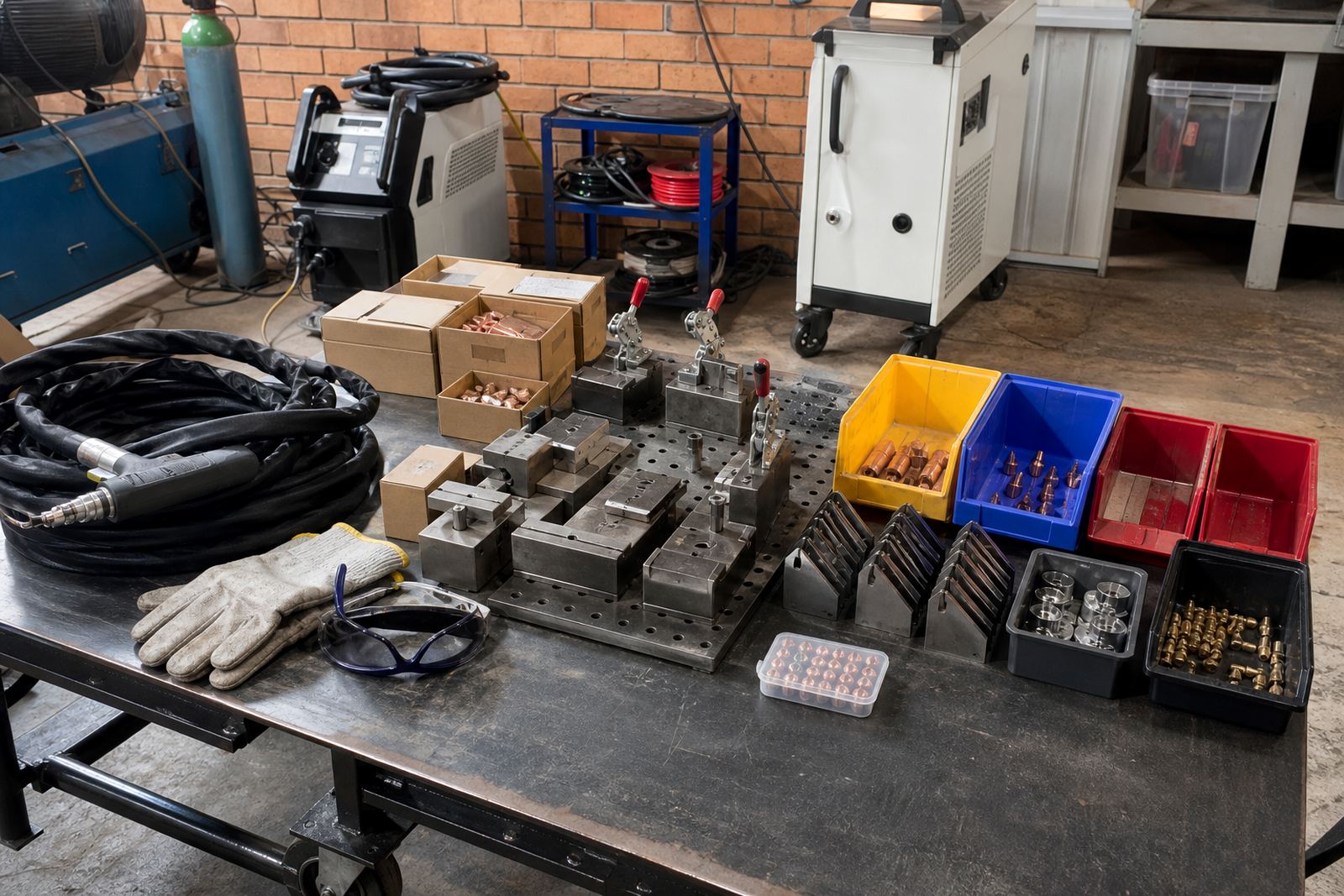
For learners and workshops that want to start with the right kit, we supply starter kit guidance based on practical use. A typical starter package for beginner work may include basic PPE, cleaning tools, nozzles, consumables, maintenance items and simple setup aids for first jobs. The exact contents depend on the application and the level of support needed, so it is worth checking that the kit matches the metals, thicknesses and daily output you expect. Some learners only need a basic set for practice, while others need a fuller package for regular workshop use.
Before ordering, check the power requirement, the metal types you will work with, the thickness range, and whether your team already has fume extraction in place. It is also wise to ask what maintenance is expected, how often wear items need replacing, and what help is available if the machine needs setup support after delivery. Routine care usually includes cleaning, checking connections, keeping optics protected and storing the unit in a dry place. That simple care routine can make a real difference to reliability over time.
- Confirm the metal types and thicknesses you need to weld
- Check the available power supply and extraction setup
- Ask what consumables are included in the starter kit
- Plan for cleaning, inspection and replacement parts
Key facts
| Course type | Entry-level hands-on handheld laser welding course |
|---|---|
| Outcome | Certificate of completion from LaserWelder Training |
| Training focus | Machine basics, joint prep, travel speed, safe operation |
| Workshop support | Site readiness checks, operator inductions, refresher visits |
| Power and setup | Electrical supply, ventilation, fume extraction and safe work area |
| Coverage | Boksburg, Johannesburg, Pretoria, Durban, Cape Town, Polokwane |