Practical Corner Work You Can Use Straight Away
This module is built for the real jobs that come up in South African workshops, from square tubing and cabinet frames to light fabrication on mild steel and stainless steel. It covers outside corners, inside corners, tack placement, torch angle, travel speed and how to keep the seam neat when the material thickness changes from one job to the next.
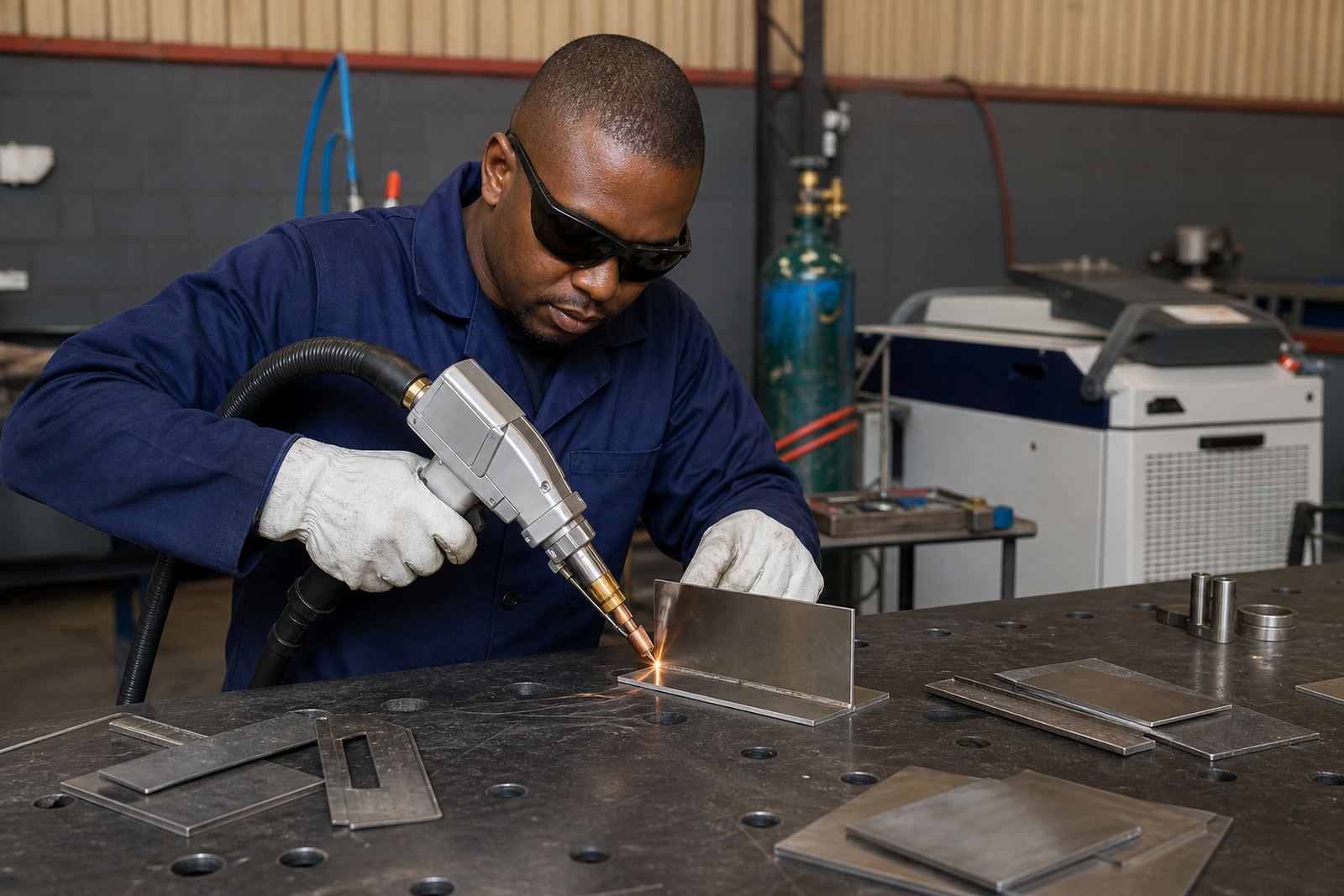
Handheld laser welding is well suited to corner joints when you want a narrow heat zone and less post-work filing or grinding. The training focuses on getting a stable bead, keeping the corner aligned, and avoiding underfill at the edge. Learners also look at how to manage distortion on thin parts, which matters when you are working with decorative panels, enclosure frames or small production runs.
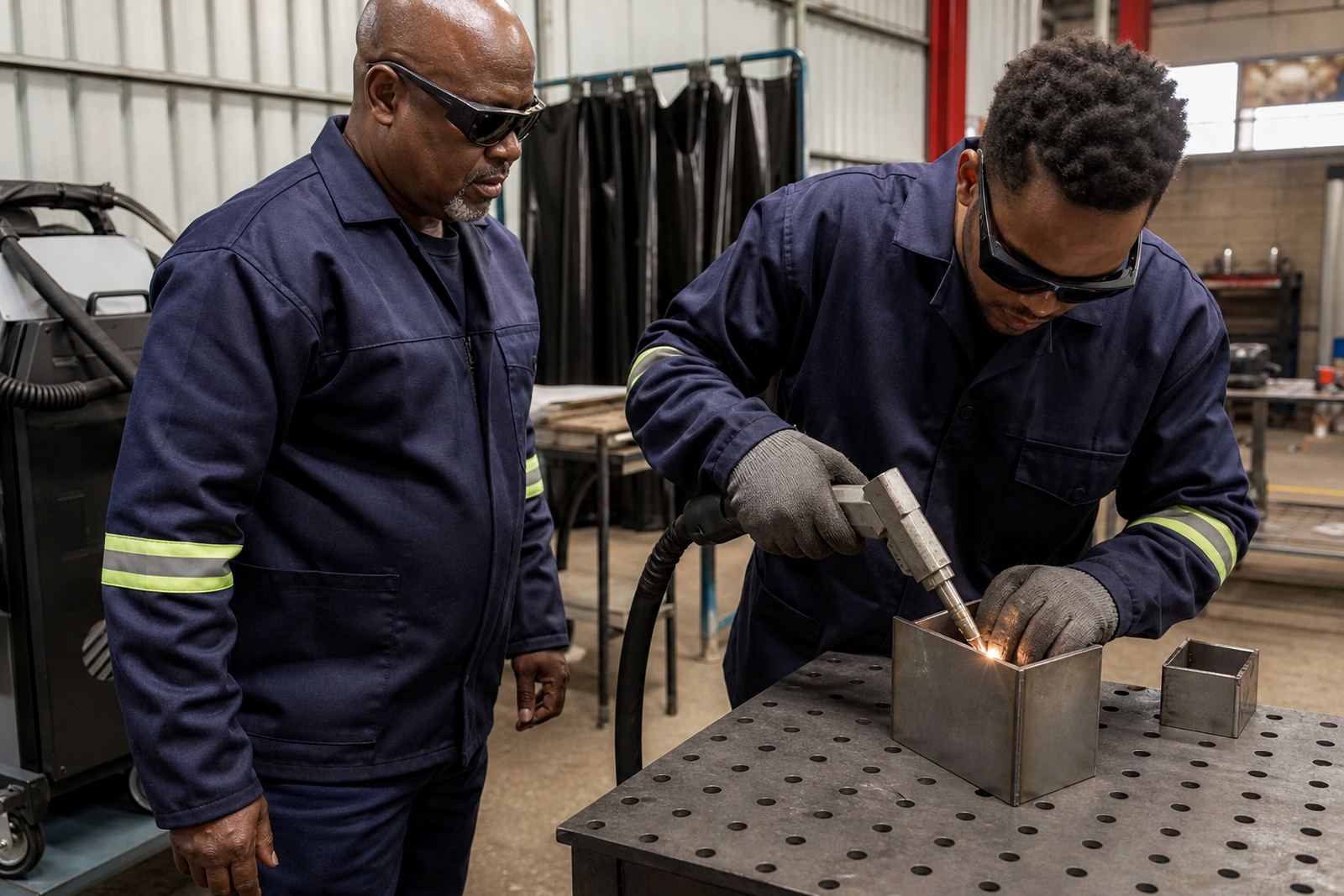
- Outside corner practice for open box and frame sections
- Inside corner control for tight corners and closed profiles
- Set-up guidance for tacks, clamps and edge alignment
- Bead consistency checks for appearance and strength
Sizes, Options and What the Module Covers
The module is supplied as a training unit for guided practice, not as a one-size-fits-all welding recipe. It is used with common handheld laser welding setups and can be matched to the level of the learner, from first exposure to more experienced operators who need correction on corner finish. The focus is practical repetition so that learners understand what changes when working with 0.8 mm sheet compared with heavier sections.
Options can include single-joint practice plates, mixed corner sets and a training pack for repeated drills. Depending on the course format, learners may work on mild steel, stainless steel or aluminium samples, with the instructor adjusting technique for reflectivity, fit-up sensitivity and heat control. For workshops in humid coastal areas, especially around Durban or Cape Town, the module also helps teams think about storage and surface condition before welding starts.
- Single corner joints for basic hand control
- Mixed practice sets for inside and outside corners
- Thin-sheet examples for light fabrication work
- Workshop-focused setups for repeated operator drills
Where It Suits Best in the Workshop
This module suits fabrication shops, training rooms, maintenance teams and small production areas where corner presentation matters. It is useful for gate frames, shelving, electrical enclosures, display units, machine guards and repair work on square or rectangular assemblies. In Boksburg and the East Rand, many learners use it to sharpen their repeatability before moving onto customer work or in-house production.
It also helps supervisors who need to standardise a method across more than one operator. If your team works across Johannesburg, Pretoria, Polokwane, Durban or Cape Town, the same corner joint approach can be taught with adjustments for power supply stability, workshop ventilation and material handling. That makes it easier to keep the same finish from one site to the next.
- Fabrication workshops handling light to medium duty assemblies
- Maintenance teams repairing frames, housings and guards
- Training centres teaching clean corner control
- Small businesses that need a better finish on visible seams
Installation, Power and Gas Requirements
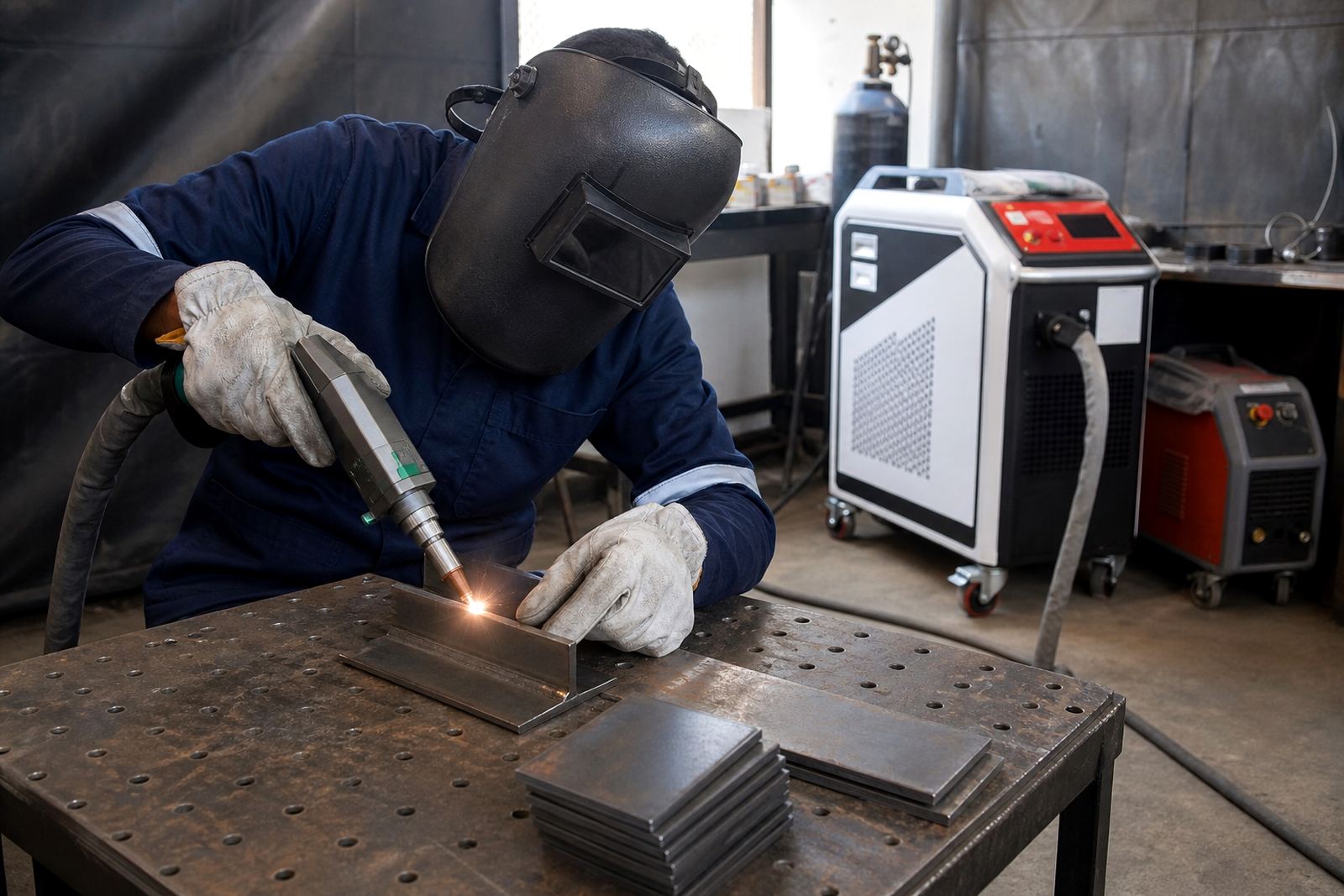
The Corner Joints Module is used in a controlled training bay with a stable work surface, proper earthing and clear access around the joint. For handheld laser welding, the machine set-up normally needs suitable electrical supply, correct shielding gas arrangement where required, and an operator position that allows steady hand movement. A clean workspace matters because dust, oil and mill scale can affect the weld edge and the final appearance.
Training also covers safety basics for a class 4 laser system, including eye protection that is appropriate for the wavelength and output being used. Fume extraction should be in place, especially when welding coated material, galvanised components or parts with surface contamination. Learners are shown where the extraction should sit, how to keep the line of sight clear, and why reflective surfaces need extra care. In load-shedding conditions, workshops should plan for power continuity and safe shut-down procedures before any practice starts.
- Stable worktable and clamping for correct corner alignment
- Proper electrical supply and safe start-up checks
- Appropriate shielding gas setup where the process calls for it
- Laser eye protection and local fume extraction at the point of work
Care, Servicing and Ongoing Use
Good corner results depend on routine care as much as operator skill. The module includes guidance on cleaning the joint area, checking nozzle or optical head condition if part of the setup, and confirming that clamps and guides are not causing movement during the weld. Regular checks help prevent rough edges, missed fusion at the corner root and unnecessary rework.
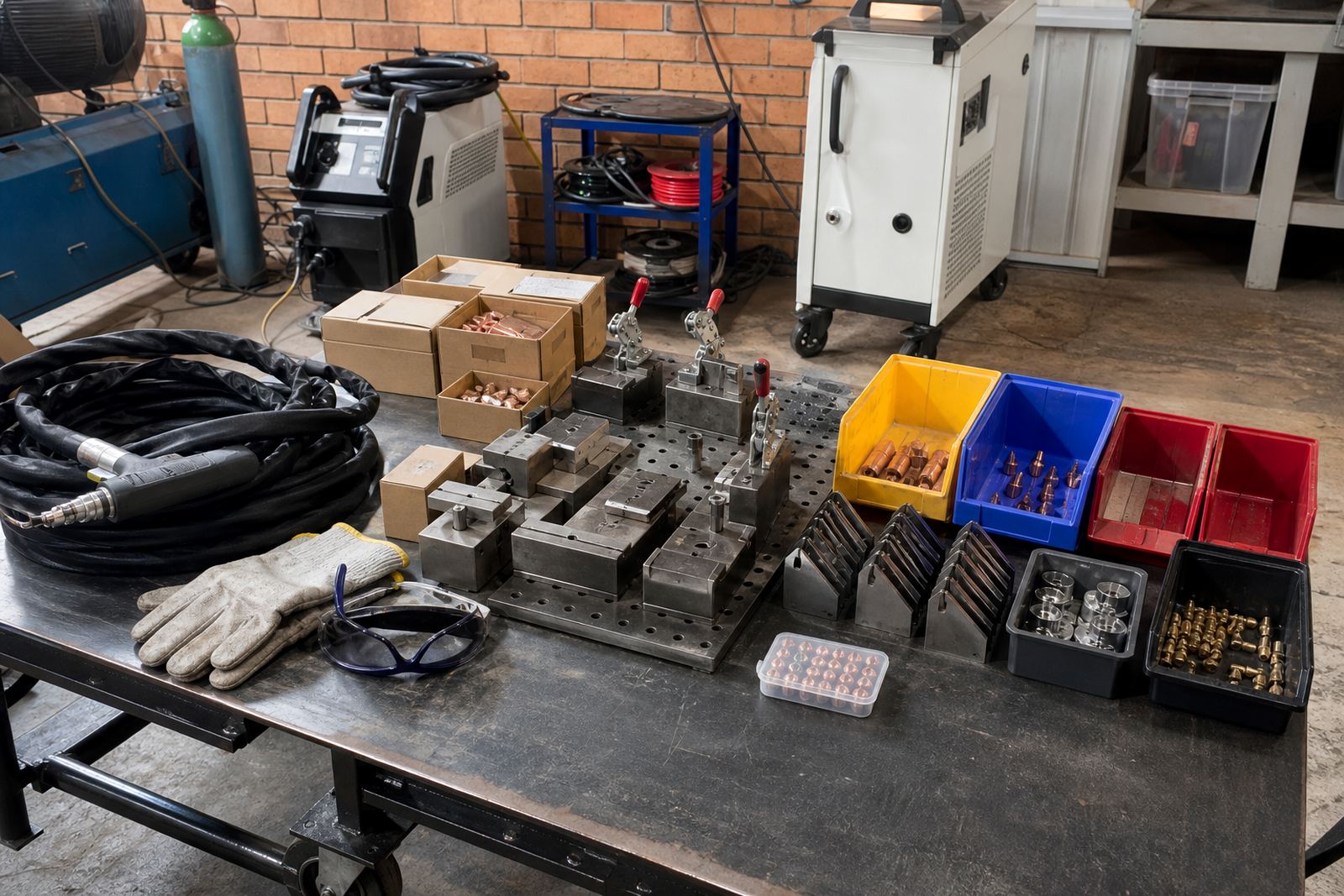
For workshops that use the module often, we suggest a simple maintenance routine after each session. Wipe down exposed surfaces, store samples away from moisture, check cables and hoses for wear, and make sure the extraction path is clear of offcuts and dust. If the module is being used for refresher work, a short practice plan keeps the learning focused and helps the team stay consistent without wasting material.
- Clean the sample pieces before each session
- Check clamps, cable routing and hose condition
- Keep the training area clear of swarf, dust and scrap
- Store the module and consumables in a dry place
What to Check Before You Order
Before ordering, confirm the material type, thickness range and the sort of corner joints you want to practise most. It also helps to note whether the training is for beginners, operators moving from another process, or workshop staff who need better control on visible corners. If you are training across multiple branches, tell us which sites need the module so we can plan the right starter pack and support documents.
Ask for the training document pack if you want a clearer handover for supervisors or staff records. The pack can support site readiness checks, operator inductions, safety briefings and refresher visits after the first session. Our team in Boksburg supports learners and workshops across South Africa, with practical help for Johannesburg, Pretoria, Durban, Cape Town and Polokwane. If you need setup advice or starter kit support, use the enquiry form on our contact page and we will respond with the next steps.
- Material type and thickness you want to train on
- Inside corners, outside corners, or both
- Whether the team needs beginner or refresher level training
- Need for starter kit setup, documentation or follow-up support
Key facts
| Module focus | Inside and outside corner joints for handheld laser welding |
|---|---|
| Suitable materials | Mild steel, stainless steel and aluminium samples |
| Typical training thickness | About 0.8 mm to 3.0 mm for basic corner practice |
| Safety requirements | Laser class 4 eye protection and local fume extraction |
| Power needs | Stable workshop supply with safe shut-down planning for outages |
| Support options | Starter kit setup, supervisor coaching, refresher visits and document pack |